
Open any recipe site and you'll find a tidy little nutrition box under the ingredient list: calories, fat, carbs, protein, all rounded to clean numbers. It looks like a lab result. It is not. In almost every case, that box is a rough average built from generic database entries, and the gap between what it says and what you actually ate can be significant.
That gap matters more than it used to. People track macros for training, watch sodium for blood pressure, or count calories for weight goals, and they're leaning on numbers that were never measured against the dish in front of them. Understanding where those numbers actually come from, and where they quietly fall apart, is the first step to getting something you can trust.
The label on the recipe card was never about your kitchen
Most recipe nutrition boxes are generated by plugging ingredient names into a nutrition database like the USDA's FoodData Central, pulling a generic value for "olive oil" or "chicken breast," and doing simple multiplication. That database entry represents an average of many samples, not the specific bottle of oil or cut of meat sitting on your counter.
Brand, cut, ripeness, and even the season a vegetable was harvested in all shift the real numbers by a meaningful margin. A "medium onion" in a database might be defined as 110 grams. The onion you just chopped could be 70 grams or 160 grams, and nobody adjusted the math for that.
None of this makes the recipe box useless. It's a reasonable starting estimate. The problem is that most people treat it as a precise fact rather than the rough average it actually is.
Serving size is where the math falls apart first
 Photo by Rachel Loughman on Pexels
Before any ingredient math even starts, someone has to decide how many servings a recipe makes, and that decision is where a lot of error gets introduced. A recipe author eyeballs "this serves six" without weighing the finished dish and dividing evenly, so the per-serving number is really a guess layered on top of a guess.
Portion size also isn't fixed in the real world the way it is on paper. If a recipe assumes a 200 gram serving and you plate 280 grams because that's what looked right on the plate, every number on the label needs to scale by 40 percent, and almost nobody does that math by hand at dinner.
This is one of the easiest errors to fix once you notice it. Weighing a finished dish and dividing by the actual number of servings you plan to eat gets you far closer to reality than trusting the recipe author's serving guess.
Cooking changes weight, and weight changes the numbers
Raw ingredient weights and cooked ingredient weights are not the same thing, and most home nutrition math quietly mixes the two. A boneless chicken breast loses roughly 25 percent of its weight to moisture during cooking. Rice and pasta gain weight as they absorb water. Vegetables sauteed in oil absorb some of that oil into the food itself.
If a recipe lists "6 ounces chicken breast" and the nutrition calculation is based on raw weight, but you're actually eating the cooked, reduced portion, the calorie density per ounce is meaningfully higher than the raw number implied, even though the total calories in the dish haven't changed.
Oil absorption is the trickiest version of this. Pan-frying in two tablespoons of oil doesn't mean the food absorbed all of it. Some stays in the pan. Estimating that split accurately by eye is close to impossible, which is exactly the kind of variable a proper calculator is built to handle with defaults based on cooking method rather than a flat guess.
Ingredient substitutions blow up an accurate label fast
 Photo by Merve on Pexels
Recipe nutrition boxes are calculated once, for one specific ingredient list, and then reused indefinitely even after readers start substituting. Swap butter for olive oil, regular flour for almond flour, or sugar for a sugar alternative, and the original nutrition numbers no longer describe what's actually in the bowl.
These aren't small changes either. Almond flour and all-purpose flour differ by roughly three times in carbohydrate content per cup. A recipe that lists 40 grams of carbs per serving based on wheat flour could genuinely be closer to 15 grams once almond flour is swapped in, and the printed label has no way of knowing that happened.
The only real fix is recalculating after every substitution, not adjusting the old number by feel. This is exactly the workflow a recipe-specific calculator supports and a static printed nutrition box cannot.
Optional and to-taste ingredients disappear from the math entirely
"Salt to taste," "a drizzle of oil," and "a handful of cheese" are common in recipe writing, and every one of them is a nutrition blind spot. Database-driven nutrition boxes generally can't account for an ingredient with no fixed quantity, so they either skip it entirely or apply a small placeholder amount that may not match what actually went into the pan.
Garnishes suffer the same problem. A finishing drizzle of good olive oil, a sprinkle of parmesan, or a pat of butter melted on top are often left out of the calculation altogether because they read as decorative rather than substantive, even though a tablespoon of olive oil alone is around 120 calories.
Over a single dish this might be a rounding error. Across a week of meals built the same way, these skipped ingredients add up to a real and consistent undercount that slowly throws off anyone trying to hit a specific daily target.
Rounding rules hide error that compounds across ingredients
 Photo by Supplements On Demand on Pexels
Nutrition labeling rules, including the ones the FDA sets for packaged food, allow rounding at several points: calories round to the nearest 5 or 10, fat rounds to the nearest half gram, and small amounts of micronutrients often round down to zero entirely. That rounding is designed to be reasonable for a single packaged item.
A homemade recipe with 15 or 20 ingredients accumulates each of those small roundings independently, and they don't average out to zero the way you'd hope. A little rounding error in the same direction on several ingredients can shift a recipe's total by a noticeable amount by the time every line item is summed.
This is one more reason a single "per serving" number on a recipe card deserves some skepticism. It isn't wrong on purpose, it's just the accumulated result of a dozen small simplifications, each individually reasonable and collectively not that precise. The standardized format itself, what most people just call the nutrition facts label, was designed for a single packaged product with a fixed recipe, not a home kitchen where every batch varies slightly.
What a proper recipe nutrition calculator actually does differently
A calculator built specifically for recipes, rather than a single packaged product, works ingredient by ingredient against a real food database instead of relying on whatever number a recipe author typed in once. Enter the actual ingredients and quantities you used, including substitutions, and it recalculates from scratch instead of reusing stale numbers.
That's the gap a tool like the free Recipe Nutrition Calculator from EvvyTools is built to close. Build the recipe from more than 80 real ingredients, adjust quantities and swaps as you actually cook, and it outputs a full FDA-style nutrition label with a macro breakdown for the recipe as written, not a generic estimate someone else made months ago.
That per-recipe, per-substitution recalculation is the single biggest difference between a printed nutrition box and a number you can actually plan around. It doesn't remove every source of variability, cooking method and portion size still matter, but it removes the guesswork of reusing someone else's static estimate for your specific version of the dish.
Reading the output without over-trusting it
Even a well-built calculator is still working from database averages for each ingredient, so the output should be read as a solid estimate, not a lab-grade measurement. The difference between a database entry and your literal chicken breast will never fully disappear, no matter how good the tool is.
What does improve dramatically is consistency. If you build the same recipe the same way every time and check the numbers against a calculator rather than eyeballing it, you get a repeatable baseline you can compare week to week, which matters more for most people's goals than hitting an exact calorie figure.
Vitamins and minerals deserve the same grain of salt. A calculator can show you a reasonable estimate of iron, vitamin C, or fiber content based on database values, but nutrient levels in real produce vary by growing conditions more than macronutrients do, so treat those numbers as directional rather than exact.
The underlying concept here, sometimes called food energy in nutrition science, is itself an estimate of usable energy rather than a literal count of anything physical in the food. Every calorie figure you've ever seen, on a label or from a calculator, descends from the same modeling assumptions, which is a useful thing to remember before treating any single number as gospel.
A simple workflow for numbers you can actually use
 Photo by Leeloo The First on Pexels
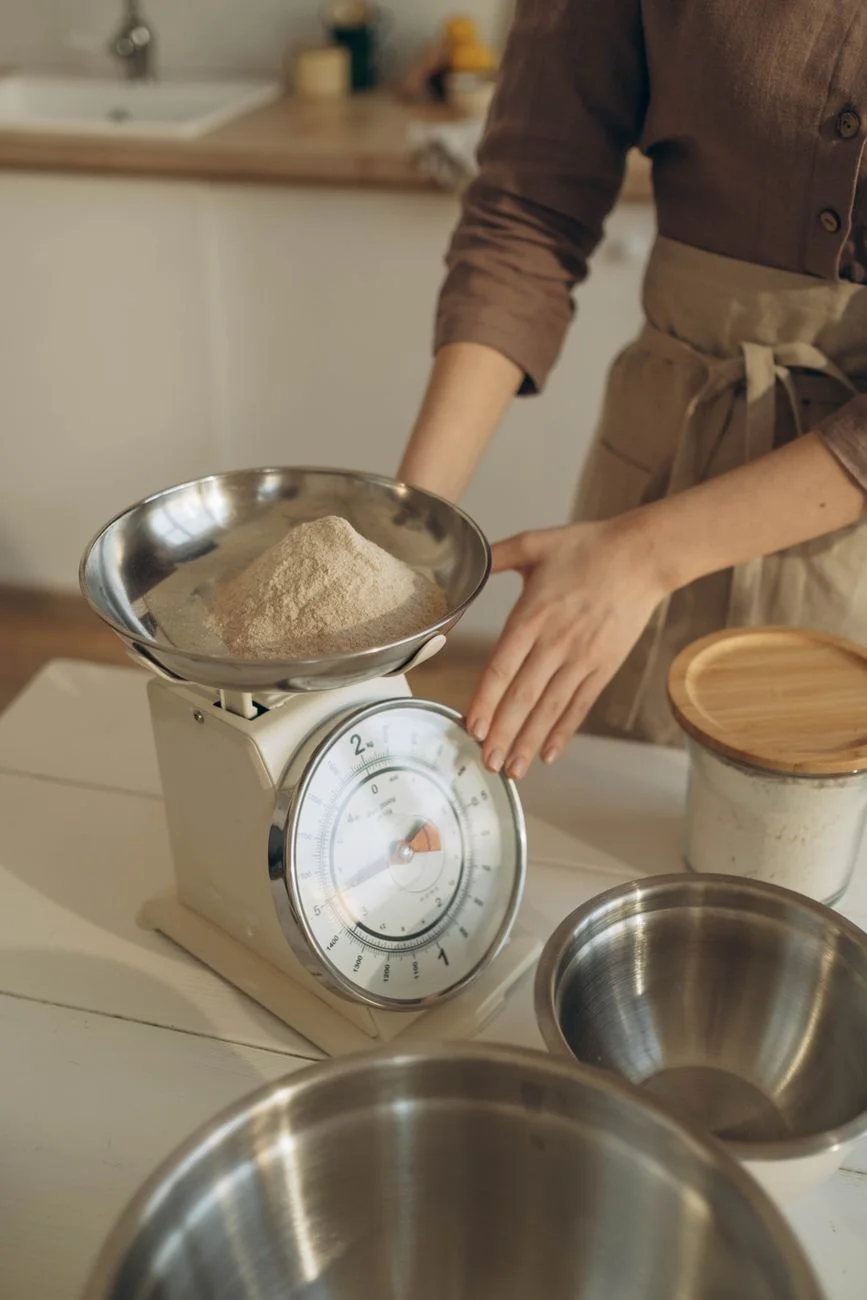
Start by weighing your ingredients instead of trusting a "medium" or "large" descriptor. A kitchen scale removes the biggest single source of error before any calculation even happens, and it takes seconds once it's part of the routine.
Enter the recipe as you actually cooked it, substitutions and all, rather than the original published version. Recalculate any time you change an ingredient meaningfully, not just the first time you make the dish, since a swapped flour or oil changes the totals every time it happens.
Finally, weigh or measure the finished dish and divide by how many servings you're actually portioning out, rather than trusting the recipe author's serving count. That single step fixes most of the per-serving error that creeps in before any ingredient math even starts.
When the number matters enough to double check
For casual cooking, a rough estimate is genuinely fine. Nobody needs lab-precision nutrition data to make dinner. But if you're managing a medical condition, training for a specific performance goal, or tracking macros closely enough that a 15 percent swing changes your plan, it's worth treating the printed recipe box as a starting point rather than a final answer.
In those cases, recalculating with your actual ingredients, actual weights, and actual serving sizes through a dedicated tool gets you meaningfully closer to the truth than any generic recipe card ever will. The math isn't complicated, it just needs the real inputs instead of someone else's averages, and that's the part most people skip.
If you want a broader sense of daily targets rather than a single dish, the concept of a Dietary Reference Intake is a useful, non-diet-specific starting point for balance across a day. For more free calculators and guides like this one, browse the EvvyTools tools directory or the blog hub for related breakdowns.