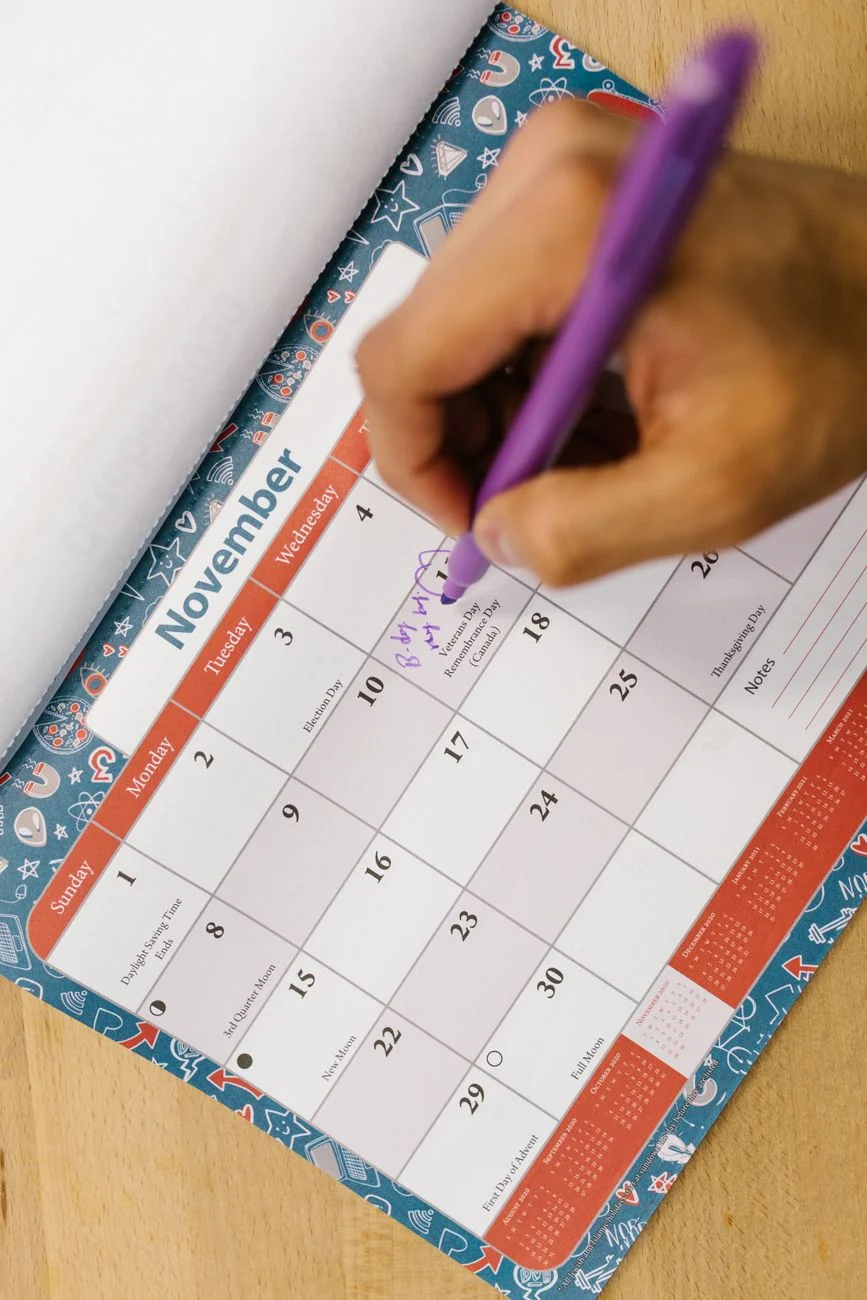


A freelance designer closes the year with a healthy profit on paper. Every invoice was eventually paid, every project came in on budget, and the books say she earned more than she did the year before. Yet in October she nearly missed her rent, because three large clients all paid on day 75 while her software, insurance and tax bills kept arriving on day 30. Nothing about her business was broken. Her cash was simply in the wrong place at the wrong time.
This is the most common financial surprise for small businesses and independent workers, and it has a boring explanation. Profit measures whether you earn more than you spend over a stretch of time. Cash measures whether the money is in your account on the day a bill is due. Those two numbers can disagree for months at a stretch, and the disagreement is where good businesses get into trouble.
Profit and Cash Are Two Different Scoreboards
Profit is an accounting idea. When you finish a project and send the invoice, most bookkeeping methods count the income right away, even though no money has moved. Likewise, an expense can be recorded when you receive the bill rather than when you pay it. The result is a tidy picture of how the work went, which is useful for taxes and for judging whether the business model works.
Cash flow is the plain record of money actually entering and leaving your bank account. It is less tidy and far less forgiving. A sale you have not been paid for does not help you buy inventory. A profitable quarter does not cover payroll if the clients behind it have not settled up yet. The Wikipedia overview of cash flow explains the distinction well, and it is worth a read if the terms blur together for you.
The practical lesson is that you need to watch both. A business that only tracks profit can feel rich and be one late payment away from an overdraft. A business that watches its cash can see trouble coming while it is still cheap to fix.
Where the Timing Gap Comes From
Most cash crunches come from a short list of causes, and almost all of them involve a delay between doing the work and receiving the money.
Slow-paying customers. Net 30 on an invoice often turns into 45 or 60 days in practice. Money owed to you is called accounts receivable, and a growing pile of it can look like success while the bank balance shrinks.
Costs that arrive before revenue. Inventory, materials, contractors, ad spend and software subscriptions often have to be paid before the sale they support. A larger order makes this worse, because you spend more up front to earn more later.
Lumpy bills. Quarterly estimated tax payments, annual insurance premiums, license renewals and equipment replacements do not arrive in neat monthly slices. They land in specific months and flatten the cash balance when they do.
Seasonality. A landscaper, a tax preparer and a wedding photographer all have months that carry the year. The slow months still have rent, software and loan payments, so the money earned in the busy months has to stretch across the quiet ones.
 Photo by Florencia Ceruti on Pexels
Why a Monthly Average Hides the Problem
It is tempting to deal with all this by averaging. If the business earns 60,000 dollars a year and spends 48,000, it nets 12,000, which is 1,000 a month. The average says there is a thousand dollars of cushion every month.
The bank account does not experience averages. It experiences a sequence. Imagine a year where the first quarter brings in 6,000 dollars in cash but 14,000 in bills, because the tax payment, the insurance renewal and a new laptop all landed together. The account would be 8,000 dollars underwater by the end of March, even though the full year ends in the black. If there is no cushion to absorb that dip, the business borrows on a credit card, delays a bill, or skips paying the owner.
Averages answer the question of whether the business is healthy. A month-by-month sequence answers the question of whether it can survive Tuesday. You need the second one to make decisions like when to hire, when to buy equipment, and when to say yes to a project with slow-paying terms.
The Idea Behind a Rolling Forecast
A cash flow forecast is a month-by-month table with four lines for each month: the cash you start with, the cash you expect to collect, the cash you expect to spend, and the cash you end with. The ending balance becomes next month's starting balance, and the chain continues across twelve months.
The word rolling matters. Each month you drop the month that just ended, add a new one at the far end, and replace your guesses for the near months with real numbers. That keeps the horizon at a full year and keeps the model honest, because every estimate gets checked against reality soon after it is made.
You do not need accounting software to start. A spreadsheet with twelve columns works, and so does a purpose-built calculator. The Small Business Administration publishes plain-language guidance on managing cash and building a basic financial plan, which is a good place to see how the pieces fit together.
Building Your First Forecast Step by Step
Start with a realistic opening balance. Use what is actually in your business account today, not what you expect to be there after a payment you are waiting on.
Next, list your expected income month by month, but record it in the month you expect to be paid, not the month you do the work. If a client usually pays about 45 days after the invoice, a project finished in January shows up as cash in March. This one habit is what turns a profit projection into a cash forecast.
Then list expenses by the month they leave your account. Split them into two groups:
- Fixed and recurring. Rent, insurance, software, loan payments, payroll and subscriptions. These are predictable and should appear every month they apply.
- Irregular and one-time. Tax payments, annual fees, equipment, a trade show, a planned hire. Put each one in the specific month it is due.
Finally, add a line for the owner's pay. Many freelancers forget this one and discover that the business looks fine only because its owner has been quietly living on less than the model assumes.
Reading the Danger Zones
Once the table is filled in, look at the ending balance of each month. Any month where it dips toward zero or below is a danger zone, and you now know about it months in advance.
The pattern of the dip tells you what kind of problem you have. A single deep dip in a month with a big tax bill means you need a set-aside. A slow downward slide across several months means expenses are outrunning collections and something structural has to change. A dip in the same months every year points to seasonality that needs a reserve built in the good months.
Each of these has a different fix, and that is the value of the forecast. Without it, all three feel like the same vague stress. With it, you can see which lever to pull. You can ask for a deposit on larger projects, shorten payment terms, move a purchase from a tight month to a loose one, or arrange a credit line while the business still looks strong to a lender.
 Photo by Skylar Kang on Pexels
Stress-Testing the Forecast
A single forecast is a best guess. A useful one also asks what happens when the guess is wrong. Try three simple scenarios and see how the danger months shift.
Delay every customer payment by 30 days. This is the most common way real life departs from the plan, and it often moves a comfortable month into the red. Lose your biggest client for a quarter and see how long the cash lasts. Add one unexpected 3,000 dollar expense in the worst month and check whether the balance survives.
If any of these scenarios push you below zero, you have learned how much cushion you really need. Many advisors suggest holding enough cash to cover a few months of fixed costs, and the right number for you depends on how predictable your income is. Seasonal or project-based work generally calls for more. The nonprofit SCORE mentoring network offers free guidance from experienced business owners, which can help you pick a sensible target.
Keeping Taxes From Becoming the Surprise
For many independent workers the biggest single drain on cash is tax. Income tax, self-employment tax and sales tax do not come out automatically the way an employee's withholding does, so the money has to be set aside by you. The IRS small business and self-employed resources explain which payments are due and when, including the quarterly estimated schedule.
Put those dates into the forecast as real outflows. If you also add a monthly set-aside line that moves a fixed percentage of every payment into a separate tax account, the quarterly bill stops feeling like a punch and becomes a transfer you were already planning for. The set-aside is cash you never really had, so treating it as untouchable is accurate rather than restrictive.
Letting a Calculator Do the Repetitive Part
The method is simple, but the bookkeeping is tedious, and tedious tasks get skipped. Every change to a payment date ripples through every later month, which is exactly the kind of chain a spreadsheet makes easy to break.
The free Cash Flow Forecaster by EvvyTools builds a 12-month rolling model from your starting balance, expected income and recurring and one-time expenses, and flags the months where the balance falls into the danger zone. Enter your numbers, try the delayed-payment scenario, and you will see within a few minutes which months need attention. If you want more planning help, the EvvyTools tools directory has other calculators for pricing, taxes and budgeting, and the EvvyTools blog covers the reasoning behind many of them.
 Photo by Erika Andrade on Pexels
The Short Version
Profit tells you whether your business model works. Cash tells you whether you can pay the bill that is due Friday. The two diverge because customers pay late, costs arrive early, bills come in lumps and seasons change.
A 12-month rolling forecast, built by recording money in the month it actually moves, turns that divergence into something you can see. Look for the months where the balance dips, work out whether the cause is a lump, a slide or a season, and choose the matching fix while there is still time. Update it monthly, stress-test it with a late-payment scenario, and keep a cushion sized to how unpredictable your income is. Do that, and the next profitable year will also be a comfortable one.