

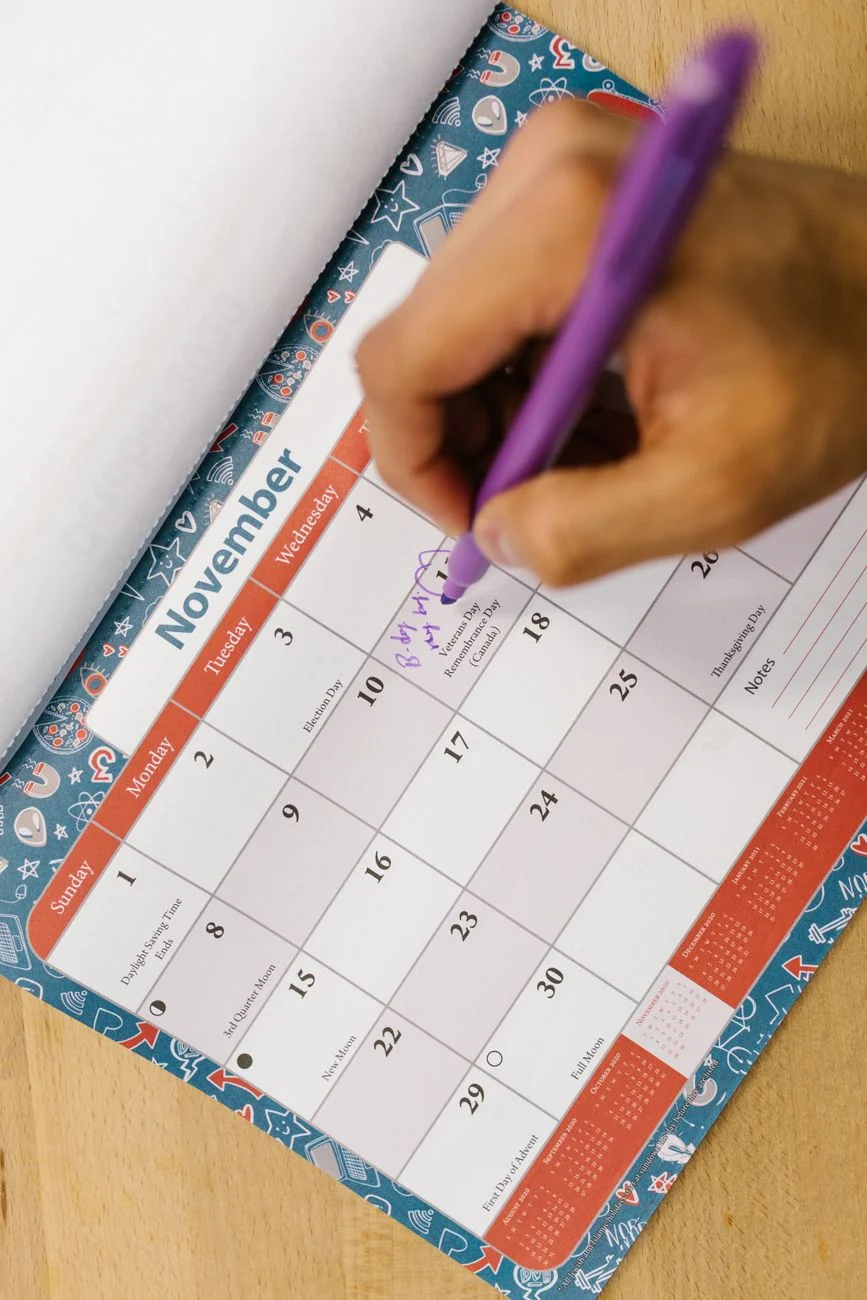
Picture a household that tracks its money carefully. Rent, groceries, the car payment, the phone plan and the streaming subscriptions all fit inside the monthly number with a little left over. Then March arrives with a six-month car insurance bill, April brings the property tax installment, and by June the vet, the dentist and a wedding gift have all landed in the same stretch. The budget did not fail because anyone overspent. It failed because it never knew those bills existed.
This is one of the most common reasons a budget feels like it works for two months and then collapses. The monthly view hides every cost that does not arrive monthly. The good news is that the fix is arithmetic, not willpower, and you can do most of it in one sitting with a list and a calculator.
The Hidden Problem With Monthly Thinking
A monthly budget assumes every month looks roughly like every other month. Income comes in on a schedule, so planning around a month feels natural. Expenses do not follow the same rhythm. Some bills arrive weekly, some monthly, some quarterly, some once a year, and some arrive at random, like a cracked windshield or a broken dryer.
When you build a budget only from the bills you see every month, you are planning for a version of your life that has no insurance renewals, no gifts, no registration fees and no repairs. The plan looks tidy because the expensive surprises have been left off the page. The surprises still show up, they just land on a credit card or drain a savings account that was meant for something else.
Researchers who study household spending keep finding that real budgets are lumpy. The Bureau of Labor Statistics Consumer Expenditure Surveys track how households spend across dozens of categories, and a quick look at the list shows how many of them, from insurance to healthcare to gifts, are not monthly line items at all.
Sorting Bills by How Often They Arrive
Before you can fix the gap, you need to see its size. Start by sorting every expense you can think of into four groups based on how often it arrives.
Fixed and monthly. Rent or mortgage, loan payments, utilities, phone, internet. These are already in your budget and need nothing new.
Fixed but infrequent. Car insurance paid twice a year, property tax, annual software or membership fees, vehicle registration, professional licenses, a yearly domain renewal. You know the amount and the date. These are the easiest to plan for and the most commonly forgotten.
Predictable but variable. Holiday gifts, birthdays, back-to-school costs, annual travel, a seasonal heating bill that spikes in January. You know roughly when and roughly how much.
Truly irregular. Car repairs, medical copays, appliance failures, a trip you did not plan. You cannot name the date, but over a year you can name the likelihood that something will break.
 Photo by Leeloo The First on Pexels
Turning Yearly Costs Into a Monthly Number
The technique has an old name in finance. A sinking fund is money you set aside in small, regular amounts so that a known future cost is already covered when it arrives. Wikipedia's article on sinking funds describes how businesses and governments have used the idea for centuries to pay off debts and replace equipment. A household version is simply a savings pot with a purpose.
The math is plain division. Take the annual cost and divide by twelve to get the monthly set-aside. A 900 dollar car insurance renewal becomes 75 dollars a month. A 360 dollar annual software plan becomes 30. A 600 dollar holiday gift budget becomes 50. None of those numbers is frightening on its own, but together they can add up to a few hundred dollars a month that your current budget does not account for at all.
If you are paid every two weeks, divide by 26 instead of 12 and you get a smaller per-paycheck amount that matches how money actually arrives. If you are paid twice a month, divide by 24. Matching the divisor to your pay schedule keeps the set-aside automatic, because it comes out at the same moment the money comes in.
A Worked Example With Real Numbers
Consider a household with 4,800 dollars in monthly take-home pay. The visible monthly bills total 3,900 dollars, which leaves 900 dollars of apparent breathing room. That feels comfortable, until the yearly list gets written down.
Car insurance is 1,200 dollars a year. Property tax is 2,400. Registration and inspection come to 180. Annual subscriptions and memberships add up to 420. Gifts and holidays run about 900. A rough allowance for car and home repairs, based on past years, is 1,500. The total is 6,600 dollars a year, or 550 dollars a month.
That 550 dollars comes straight out of the 900 dollars that looked free. The real margin is 350 dollars, not 900. The household was not wasting money. It was spending money it had already promised to a future bill, and the budget never said so. Seeing the true figure changes decisions like whether a 300 dollar monthly car upgrade is affordable.
Where the Money Should Wait
A set-aside only works if the money is somewhere you will not accidentally spend it. A separate savings account makes the boundary clear, and many banks let you open several accounts with different nicknames at no cost. Naming one "Car and Home" and another "Gifts and Travel" turns a vague intention into something you can check.
Keep the money in an account that is safe and easy to reach rather than invested, because these bills have due dates. A holiday fund that dropped in value the week before December would defeat its own purpose. The Consumer Financial Protection Bureau publishes plain-language guidance on savings accounts and on how deposit insurance protects balances, which is worth a glance when you are choosing where to park it.
If your bank supports automatic transfers, set one up for the day after payday. The transfer should feel like a bill you pay to your future self. The less often you have to decide, the more reliably it happens.
 Photo by ready made on Pexels
How This Fits With the 50/30/20 Rule
Many people build budgets with the 50/30/20 rule, which splits take-home pay into needs, wants and savings. Irregular bills slot into it cleanly once you decide where they belong. Insurance, property tax, registration and repairs are needs, so their monthly set-aside belongs in the 50 percent. Gifts, travel and annual subscriptions you could live without belong in the 30.
The mistake is leaving them out of both. When the monthly set-aside is not counted in needs, the needs category looks smaller than it is, and the household appears to have more room in the wants category than it really does. Adding the set-asides is often the moment a household discovers that its needs are closer to 60 percent of take-home pay than 50, which is useful information even if it is not welcome.
If you want to see where your own numbers land, the free Budget Calculator by EvvyTools splits your take-home pay into needs, wants and savings with subcategory breakdowns, so you can add the monthly figure for your irregular bills and watch how the percentages move.
 Photo by Hanna Pad on Pexels
Handling the Truly Random Costs
The fourth group, repairs and surprises, is the hardest, because you cannot predict a date. You can still plan for the average. Look back over the last twelve to twenty-four months of bank and card statements and add up what you spent on car repairs, home fixes, medical copays and replacements. Divide by the number of months, then round up.
That figure becomes a monthly contribution to a general buffer. It is separate from a full emergency fund, which covers a job loss or a large medical event, but it protects the emergency fund from being raided for a 400 dollar brake job. The Federal Reserve publishes research on household finances, and one recurring finding is that many households would struggle to cover even a modest unexpected expense from cash. A small, steady buffer is exactly the habit that closes that gap.
Insurance deserves its own note, because it is the single biggest irregular bill for many households. Many insurers let you choose between paying a full term up front and paying monthly with a small fee, and the NAIC consumer resources explain how policies and premiums work in plain terms. If you pay monthly already, great, it is in your budget. If you pay in a lump, the sinking fund approach is how you avoid the sting every renewal.
When the buffer is used, refill it. When it grows past a comfortable size, move the extra into longer-term savings or toward a debt. It is a working account, not a trophy.
 Photo by Pavel Danilyuk on Pexels
Keeping the System Honest
Once the set-asides are running, a short review twice a year keeps them accurate. Prices change, insurance renewals creep up, and a new pet or a new car adds a whole category. Open your list, compare it against what actually came out, and adjust the monthly amounts.
Two small habits make the review quick. First, write the due date next to every irregular bill, so a calendar reminder can warn you a month ahead. Second, when a yearly bill finally lands, pay it from the matching pot and note whether the pot had enough. A pot that is always short needs a bigger contribution, and a pot that always has a surplus can be trimmed.
The Short Version
A monthly budget is not wrong. It is incomplete, because it only sees the bills that arrive every month. List the yearly and irregular costs, divide each one by the number of paychecks you get in a year, and move that money into a separate account on payday. Count those set-asides inside your needs and wants so the percentages tell the truth.
The result is a budget that survives March, April and December. If you want a place to start, try your numbers in the free calculator, then explore more planning tools in the EvvyTools tools directory or browse related guides on the EvvyTools blog.