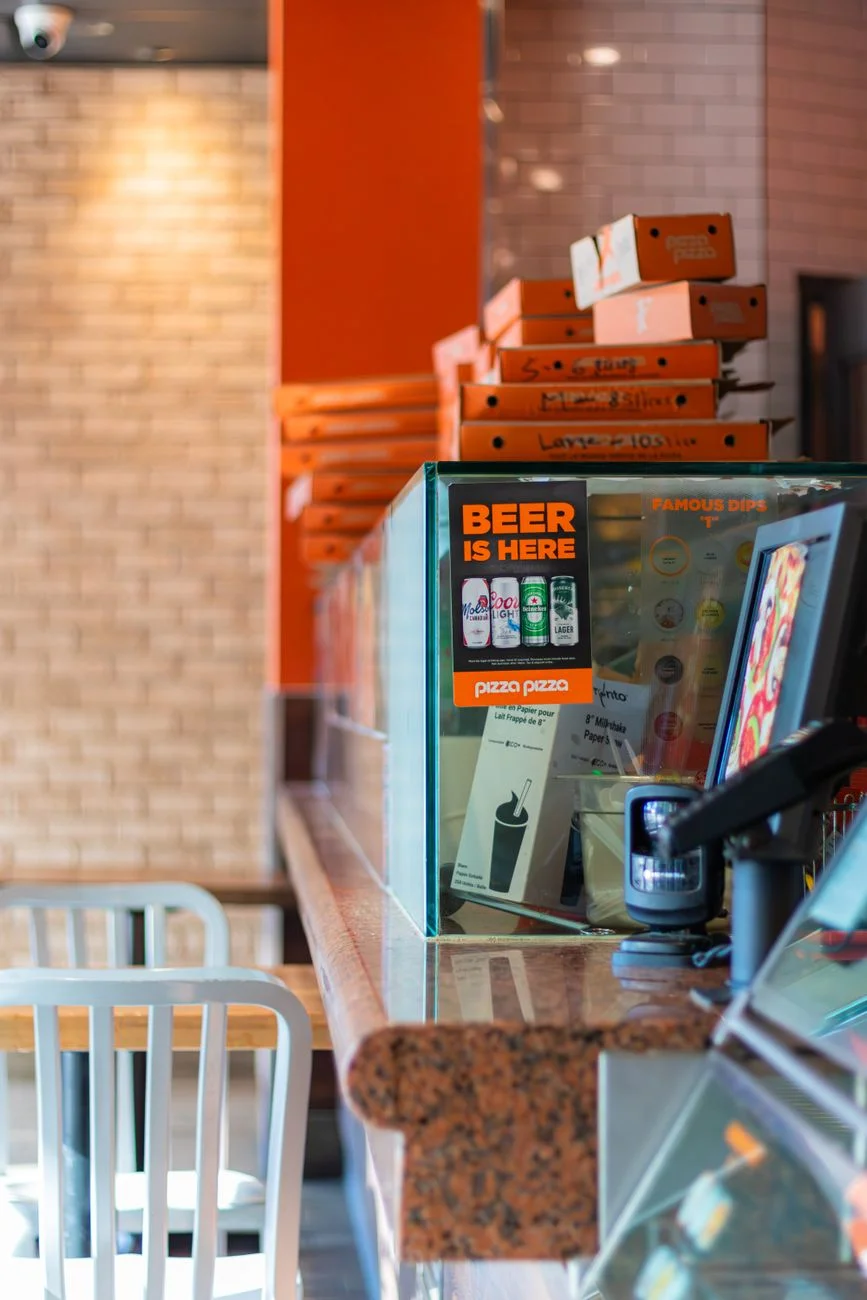
A menu board that says "upgrade to large for $2" is doing a lot of psychological work in six words. Two dollars feels small next to a $14 pizza, so the upgrade feels free. Almost nobody stops to ask what "large" actually means in square inches, or whether the chain quietly shrank the medium to make the upgrade look better. The sticker price is designed to be easy to read. The actual value of the deal is not, and that gap is where a lot of pizza money quietly disappears.
This is not really a pizza problem. It is a geometry problem wearing a pizza costume, and once you see the shape of it, you start noticing the same trick in combo meals, family bundles, and "buy one get one half off" promotions everywhere.
Why pizza size math breaks people's intuition
Pizza is round, and round things scale by area, not by diameter. A 10-inch pizza and a 14-inch pizza do not differ by 40 percent of anything you can eat. The area of a circle grows with the square of the radius, so going from a 5-inch radius to a 7-inch radius very close to doubles the amount of pizza on the table, even though the size label only went up by four inches. Most people read "10 inch to 14 inch" as a modest step up. The actual food difference is closer to a different order of magnitude.
This matters because pizza menus are priced off the size label, not the area. A chain can raise the price of a large by a reasonable-sounding amount and still be charging you more per square inch than the medium, because the label moved linearly while the food moved geometrically. Nobody is lying on the menu. The menu is just using the wrong unit for the comparison you actually care about.
The formula that actually answers the question
The area of a circle is pi times the radius squared. A pizza's radius is half its diameter, so a 12-inch pizza has a 6-inch radius and roughly 113 square inches of eating surface. A 16-inch pizza has an 8-inch radius and roughly 201 square inches, which is nearly 80 percent more pizza for what is usually a 25 to 35 percent price jump. Once you divide the price by the area instead of by the size label, the "better deal" often flips to whichever size you were not planning to order.
 Photo by Atlantic Ambience on Pexels
Rectangular and square-cut pizzas use a different formula (length times width) but the same underlying idea: area, not perimeter or diameter, is what you are actually paying for. If a place sells a sheet pizza by dimensions instead of a size name, multiply the two numbers and you have the true comparison unit.
Why "two mediums" is rarely the same as "one large"
A common promotion frames two medium pizzas as equivalent to one extra-large, usually at a price that looks like a discount either way. Run the area math and the two options are almost never close. Two 12-inch pizzas give you roughly 226 square inches combined. One 16-inch pizza gives you roughly 201 square inches. The "two mediums" option is actually more food in this example, not a wash, and the pricing rarely reflects that gap.
This cuts the other way just as often. A "family size" bundle built around three smaller pizzas can look generous on the box photo while actually delivering less total area than a single extra-large plus a side order would. The only way to know which direction the math breaks is to actually run it, because intuition about round shapes is reliably wrong in both directions.
The same trap shows up when a menu lets you swap crust style on an upgrade. A deep-dish medium and a thin-crust large can land at nearly the same price, and the size label alone will not tell you which one actually puts more food on the table, because crust thickness changes how much of that area turns into something you can eat. Area math handles the pizza surface. It does not account for a crust that is mostly air versus one that is dense all the way through, so a close call on paper is worth a second look at the actual slices before you decide.
Where combo deals hide the real cost
Combo deals bundle a pizza with sides, drinks, or a second smaller item, and the bundle price is built to look like a clear discount against buying everything separately. The catch is that the bundle usually substitutes a smaller pizza than you would have ordered on your own, so part of the "savings" is really just downsizing the centerpiece of the meal.
 Photo by Connor Scott McManus on Pexels
To check whether a combo actually saves money, price out the individual items at their individual sizes, then compare that total to the combo price at the combo's actual pizza size, not the size you assumed. If the combo swaps a large for a medium to hit its price point, you need to know that before you decide the bundle is the better order. This is the step most people skip, because the combo listing rarely states the pizza size as prominently as the price.
Coupon stacking and the limits of "percent off"
A percentage discount applied to a bad baseline is still a bad deal. "30 percent off any large" sounds aggressive, but if the large was already priced to carry a thin margin on a slightly undersized pizza, 30 percent off an inflated number can land at roughly the same price-per-square-inch as a medium with no discount at all. Coupons are calculated against the menu price, and the menu price is the thing with the area problem baked into it from the start.
The practical fix is the same either way: convert every option, discounted or not, to a price-per-square-inch figure before comparing. A coupon that looks generous on one pizza and unremarkable on another is really telling you which size was overpriced to begin with.
A repeatable way to check before you order
Pull up the menu, note the diameter (or the length and width for rectangular cuts) and the price for every size you are considering, including the one in any combo or bundle. Convert each to area using the circle or rectangle formula, then divide price by area to get a price-per-square-inch figure for every option side by side. Whichever number is lowest is the actual best value, independent of which size label sounds the most generous.
 Photo by Mizuno K on Pexels
This takes about two minutes by hand for a single comparison, and most people will not do it standing at a counter deciding between two sizes. A calculator built around this exact formula removes the friction, which is really the only reason the mental math matters: if it is too slow to check, the menu's framing wins by default.
When the "better deal" isn't actually about math
Not every pizza decision should be reduced to price-per-square-inch, and it is worth saying that plainly. Crust style, topping density, and whether you will actually eat the leftovers before they go stale are real factors that a pure area calculation does not capture. A thin-crust large with light toppings is not nutritionally or practically the same as a deep-dish medium with the same square inches of dough.
"People assume a pricing trick has to be sneaky to work. Most of the time it just relies on you not having a calculator in your pocket at the register. The math is public. Almost nobody runs it before they order." - Dennis Traina, founder of 137Foundry
The area math is best used as a tiebreaker when two options are otherwise similar, or as a sanity check when a promotion seems too generous to be real. It is a tool for catching a bad deal, not a replacement for actually wanting the pizza you are ordering.
Taking this beyond pizza
Price-per-unit-area and price-per-unit-volume comparisons show up constantly outside of pizza: pizza pans, cake pans, pie tins, and even some bulk grocery items are priced by a label that does not scale linearly with the thing you are actually buying. Round cake pans have the exact same area-versus-diameter relationship as a pizza, which is why a "9-inch to 10-inch" pan swap in a recipe changes baking time more than most people expect.
Once you have internalized that round things grow by area and not by the label on the box, you start catching these mismatches everywhere, not just at the pizza counter. It is a small piece of math that pays for itself the first time it stops you from paying extra for less food.
Checking your own order before you call it in
The fastest way to apply any of this is to run your actual options through a free pizza value calculator from EvvyTools before you order. Enter the diameter and price for each size on the menu, including whatever size a combo or bundle actually includes, and compare the price-per-square-inch output directly instead of trusting the size label.
It takes less time than reading this article took, and it works for any round or rectangular pizza, pan, or tray you are trying to compare. For more kitchen math tools built the same way, the tools directory has the full list, and the EvvyTools blog covers the reasoning behind this one and several others in more depth. You can also start from the EvvyTools homepage to see everything currently available.
Sources and further reading: pizza as a dish, the geometry of a circle's area, Consumer Reports on evaluating promotional pricing, and the National Restaurant Association for industry context on menu and combo pricing practices.