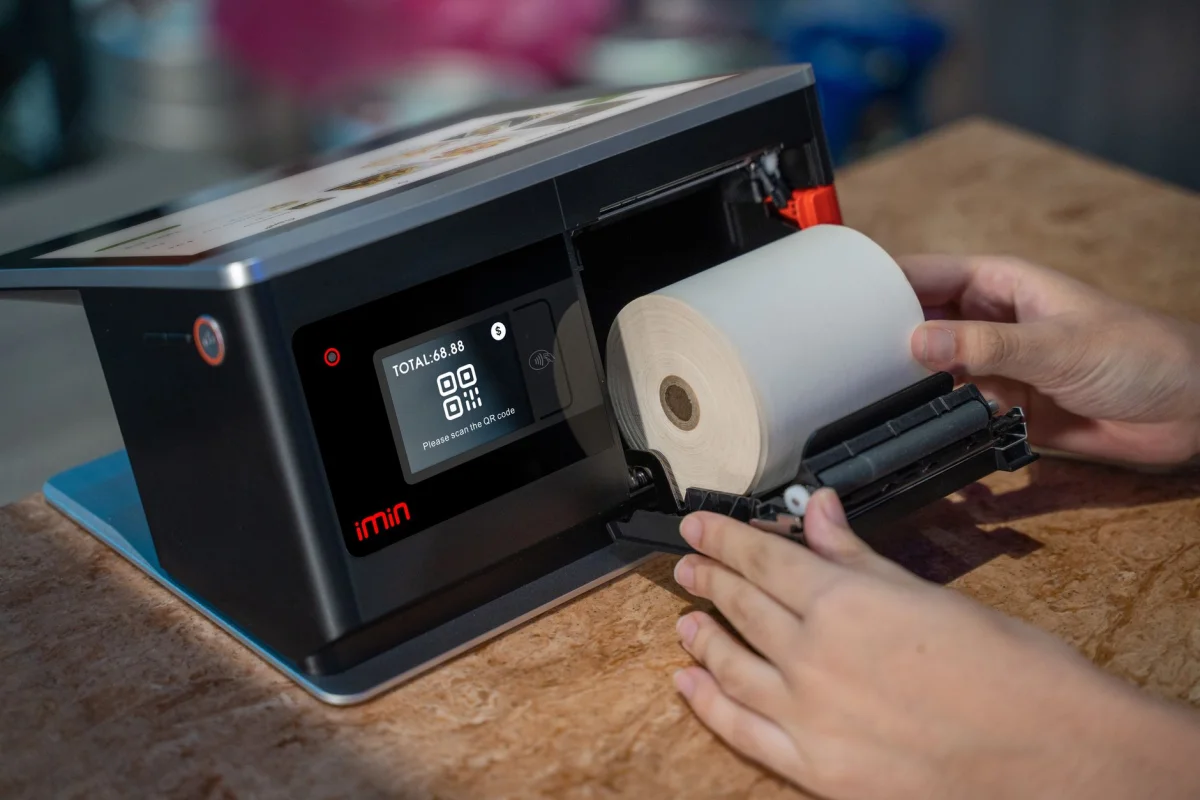


Four friends finish dinner, the server drops the check in the middle of the table, and someone says the words that end most group meals: "Let's just split it four ways." Nobody objects, because objecting feels petty. Then the person who ordered a side salad and water quietly pays for a steak and two glasses of wine they never touched.
An even split is fast and friendly, and sometimes it is exactly the right call. But it is also a small transfer of money from the lightest orderer to the heaviest one, and tax and tip make that transfer bigger than most people realize. This article walks through the math with a real example, shows a fair method that takes about two minutes, and explains when the simple split is perfectly fine.
The Even Split Hides a Transfer
The even split works because it needs no arithmetic beyond division. Add everything up, divide by the number of people, done. The problem is that it treats every plate as if it cost the same, and at most tables it does not.
Think about what you are really agreeing to when you say "split it evenly." You are agreeing that the cost of one person's choices will be shared equally, including the cocktail, the add-on dessert, and the premium entree. If everyone ordered about the same, that is a fair deal. If the orders range from a $20 plate to a $120 spread, it is a quiet subsidy.
Nobody is being dishonest here. It is just that the person who spends less tends to stay silent to avoid looking cheap, and the person who spends more is often unaware how lopsided it got. The first step toward a fair split is simply noticing that the gap exists.
 Photo by Karina Shaikhutdinova on Pexels
A Four-Person Example With Real Numbers
Let's make this concrete. Four people have dinner, and before tax and tip their individual orders come to $20, $25, $35, and $120. The total food and drink subtotal is $200. The local sales tax is 8 percent, which adds $16, and the group wants to tip 20 percent on the pre-tax subtotal, which adds $40.
The full check comes to $256. Split evenly, every person pays $64. That sounds reasonable until you compare it with what each person actually ordered.
The person who ordered $20 of food pays $64, which is more than three times their own order. The person who ordered $120 pays $64 too, which is barely more than half of theirs. Across the table, the lightest orderer overpays by $38.40 compared with the proportional share you will see in a moment, and the heaviest underpays by $89.60.
Tax and Tip Should Follow the Order
Here is the key idea. Sales tax is a percentage of what you bought, and a tip is usually a percentage of the bill, so both scale with the order. If your meal was small, your share of tax and tip should be small too. That is why the fair method is not complicated: you just multiply each person's own subtotal by the same factor.
In the example, the factor is the total check divided by the subtotal, which is $256 divided by $200, or 1.28. Every dollar of food carries 28 cents of tax and tip on top. The sales tax is charged on the purchase itself, so it naturally follows each person's order rather than the headcount.
Apply the factor to each order. The $20 order becomes $25.60, the $25 order becomes $32.00, the $35 order becomes $44.80, and the $120 order becomes $153.60. Add them up and you get exactly $256.00, so the check is covered with no gap and no leftover.
Why the Gap Gets Wider With Tax and Tip
You might think the extra layer of tax and tip is a rounding detail that does not change the story. It does, because it magnifies whatever difference already exists. On a $20 order, 28 percent in tax and tip is $5.60. On a $120 order, the same 28 percent is $33.60.
In an even split, those two very different add-ons get averaged together, so the light orderer pays more than their share of tax and tip while the heavy orderer pays less. The overcharge is not just the difference in food, it is the difference in food plus the difference in the percentages applied to it.
This is why a table that feels like it is only a few dollars apart on food can end up noticeably apart on the final number. The more expensive the restaurant, the more that gap grows, because the percentage is applied to a bigger base. A 20 percent tip on a $200 subtotal is a much larger number than the same tip on a $60 one.
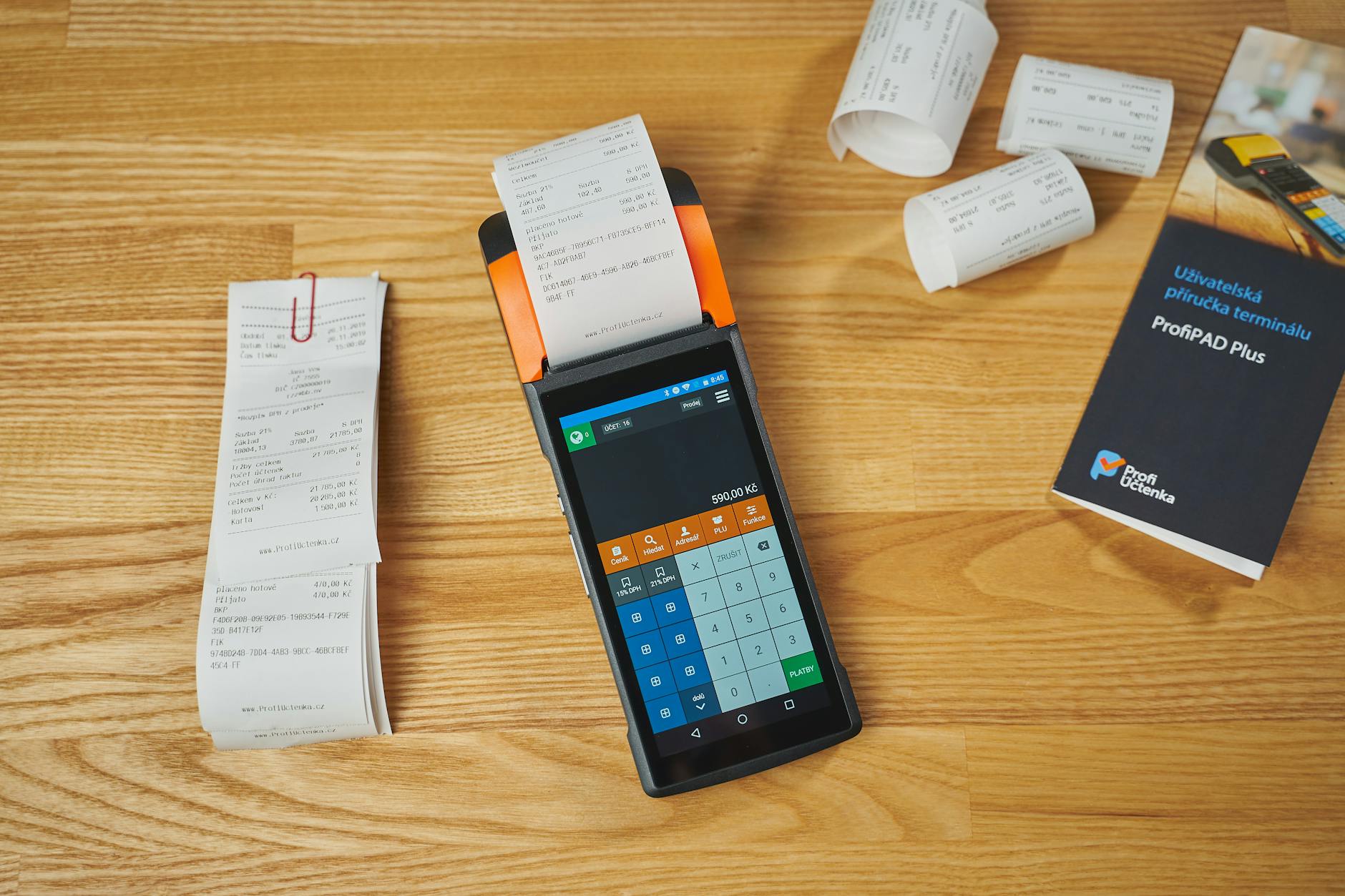 Photo by Hook Tell on Pexels
Should the Tip Be Based on Before or After Tax
Before you split anything, the group needs to agree on what the tip is based on. Many people tip on the pre-tax subtotal, since the tax is not part of the service. Others tip on the total printed at the bottom of the check because it is easier to read. Both are common, and the difference is only a couple of dollars on an ordinary meal.
What matters for the split is consistency. If you tip on the pre-tax subtotal, apply that percentage to each person's own subtotal. If you tip on the post-tax total, apply it to each person's subtotal plus their tax. Either way the method is proportional, and nobody is carrying someone else's percentage.
The history and norms of tipping vary a lot by country and by region, so it is worth checking what is customary where you are eating. In some places a service charge is already built into the price and an extra tip is optional. In the United States, tipping is a major part of how restaurant servers are paid, which is why people care about getting the number right.
Shared Plates and Group Items
Real tables are rarely clean. Someone orders an appetizer that gets passed around, and a bottle of wine goes to three out of four people. A strict item-by-item split gets awkward fast, and nobody wants to argue over one shared plate of fries.
The practical fix is to treat shared items as a pool and divide them only among the people who actually shared them. A $16 appetizer split four ways adds $4 to each person's subtotal before the proportional factor is applied. A $48 bottle of wine shared by three people adds $16 to those three subtotals and nothing to the fourth person, who skipped it.
Once the shared items are folded into each person's subtotal, the rest of the method does not change. You get an adjusted subtotal for each person, apply the same tax and tip factor, and arrive at a total for each. It adds a minute of work, and it keeps the person who skipped the wine from covering it.
Rounding Without Short-Changing the Server
Splitting almost never lands on whole cents. If the $256.00 check is divided three ways, each share is $85.33 and a third of a cent. Whoever pays the rounded-down amount leaves the server a few cents short, and a table that rounds everyone down can come up a dollar or more shy.
The simple habit is to round each person's total up to the next whole dollar or to the nearest amount you can pay easily, and let the small extra land on the tip. Rounding up is almost always safer than rounding down at a restaurant, because the extra is tiny and the shortfall is the part that matters.
If the group is paying by card, make sure the individual charges add up to at least the full check before the server runs them. Many point of sale systems let a server split a check by seat or by item, which is often easier than doing the math yourself, but you still need to agree on the tip before the cards go in.
 Photo by Sabel Blanco on Pexels
Large Parties and Automatic Gratuity
Big groups add a wrinkle that catches people off guard. Many restaurants add an automatic gratuity to the check for larger parties, and the percentage and the cutoff differ from one place to the next. If the check already includes one, tipping again on top of it will double count the service.
Look at the printed check before you do anything else. It should say whether a gratuity or service charge has been added, and the number will be on a separate line. If it is there, subtract it from your thinking about tip, then split the rest in proportion as usual.
For people who earn tips, the U.S. Department of Labor explains how tipped wages work, and the Internal Revenue Service covers how tips are treated for tax purposes. You do not need either for a casual dinner, but it helps to remember that the tip you leave is part of someone's actual pay.
When the Even Split Is Fine
None of this means you should pull out a calculator at every meal. When everyone ordered similar things, the even split is the right tool, and the time you would spend on the math is better spent on the conversation. A group of close friends who rotate who pays can come out roughly equal over a year without ever itemizing.
The even split also makes sense when the group has agreed on a norm. A birthday dinner where the host is covered, a team lunch with a shared budget, or a family meal where one person always treats are all situations where the proportional math is beside the point.
A good rule of thumb is to look at the spread before deciding. If the highest and lowest orders are within about 20 percent of each other, split evenly and move on. If one person ordered double what another did, or there was a pricey bottle or a round of cocktails on only some of the bill, it is worth taking two minutes to split in proportion.
Letting a Calculator Do the Two Minutes
Doing the proportional math by hand is not hard, but it has several steps, and it is easy to drop one when the check is in front of you and everyone is waiting. You need each subtotal, a tax rate, a tip percentage, the shared items, and a final rounding pass.
The free Tip Calculator by EvvyTools is built for the everyday version of this. It figures out how much to tip and how to split the bill among friends, so you can test a few tip percentages and see how each choice changes the per-person amount before anyone commits.
A useful habit is to run it twice at the table: once for the even split, once with the proportional numbers you worked out. If the two results are close, say so and split evenly. If they are far apart, you now have a number to point to, which is much easier than an uncomfortable conversation.
A Quick Way to Bring It Up Gracefully
The hardest part of a fair split is not the math, it is the social side. Nobody wants to be the person who asks to itemize, so a little framing helps. Something like "Want to just pay for what we ordered and split the shared stuff?" makes it sound like the easy option, not the stingy one.
Another approach is to decide the rule before the food arrives. When the server asks about separate checks, that is the cheapest moment to settle it, because the answer is a request to the restaurant and not a judgment about anyone's choices.
If you are the one who ordered the most, you can make everyone's life easier by offering to cover your own share. It costs you a few dollars more than the even split would, and it turns a potentially awkward moment into a small act of goodwill. Most tables remember that kind of thing.
The Takeaway
Splitting a check evenly is a shortcut, and like most shortcuts it gets you there faster by skipping something. What it skips is the difference between what each person ordered, and the tax and tip that ride along with it. In a four-person example with a $200 subtotal, the lightest orderer paid $64 instead of $25.60 simply because the table agreed to divide by four.
The fair method is short. Write down each person's subtotal, add shared items to the people who shared them, apply the same tax and tip factor to everyone, and round up a little at the end. When the orders are close, skip all of it and split evenly. When they are far apart, a free calculator such as EvvyTools takes the work out of the last few steps, and you can browse the full tools directory or the blog for related explainers. This article is general information, and local tipping customs and tax rules may differ from the examples here.