Two roofers walk the same house, take the same rough measurements, and come back with quotes that differ by three or four thousand dollars. Neither one is necessarily lying. The gap almost always traces back to a handful of variables that never show up on the number a homeowner fixates on: the flat square footage of the roof. Pitch, waste, tear-off layers, and how a contractor rounds up all move the total independently of how big the house actually is.
Square Footage Is Only the Starting Point
Ask most people how much roofing they need and they'll multiply the footprint of the house by some rough factor. That number is close to useless on its own. A roof's actual surface area depends on its slope, and a steep roof covers dramatically more material than a flat one sitting over the exact same floor plan. Two houses with identical 1,800 square foot footprints can need materials for anywhere from 2,000 to over 3,600 square feet of actual roof surface, depending on pitch alone.
This is the single biggest source of confusion in a first-pass estimate, and it's exactly why a contractor's number and a homeowner's back-of-envelope guess so rarely match.
What Roof Pitch Actually Does to the Math
Pitch is expressed as a ratio, like 6:12, meaning the roof rises 6 inches for every 12 inches of horizontal run. That ratio converts into a slope factor that multiplies the flat footprint into true surface area. A low-slope 3:12 roof adds a modest amount over the footprint. A steep 12:12 roof, common on older colonial-style homes, can add well over 40 percent more material than the footprint alone suggests.
Contractors who skip this adjustment, or estimate it by eye instead of calculating it, are the ones who come back mid-job needing another pallet of shingles. The National Roofing Contractors Association publishes technical guidance on exactly this kind of slope-to-area conversion because it's the single most common source of material shortfalls on residential jobs.
 Photo by Ellie Burgin on Pexels
Waste Factor Is Not Padding, It's Physics
Every roofing job includes a waste factor, typically 10 to 15 percent added on top of the calculated surface area. This isn't a contractor's markup. Shingles come in fixed dimensions, and a roof has hips, valleys, dormers, and edges that require cutting a rectangular shingle to fit an angle. Every cut piece leaves a scrap that can't be reused elsewhere on the same roof.
A roof with a simple rectangular footprint and a single ridge line needs a lower waste factor. A roof with multiple dormers, a complex hip-and-valley layout, or a lot of penetrations for vents and chimneys needs a higher one, sometimes pushing past 15 percent. This is one of the quiet reasons two quotes for the same square footage differ: one contractor priced a generic waste factor, the other actually walked the roof's geometry.
Tear-Off Layers Change the Labor Number More Than the Material Number
If a roof already has one or two layers of old shingles, most codes require at least the top layer to come off before a new one goes down. Removing a single layer is a very different job from removing two, both in labor hours and in the dumpster capacity needed for debris. This is where a lot of the quote gap that looks like a materials disagreement is actually a labor and disposal disagreement wearing a materials-shaped disguise.
Homeowners rarely know how many layers are currently on their roof until a contractor gets up there, which means an initial phone estimate and a final written quote can shift once someone actually inspects the deck.
Underlayment, Drip Edge, and Ridge Cap Aren't Optional Line Items
A shingle-only estimate misses roughly a third of what actually goes into a code-compliant roof. Underlayment goes down first as a water barrier beneath the shingles. Drip edge, a metal flashing strip along the eaves and rakes, directs water away from the fascia instead of letting it wick back under the roofing material. Ridge cap, the finishing shingles along the peak, has its own separate material calculation because it isn't cut from the same bundles as the field shingles.
Skip any of these on paper and the quote looks lower. Skip them on the actual roof and water finds its way into the deck within a season or two.
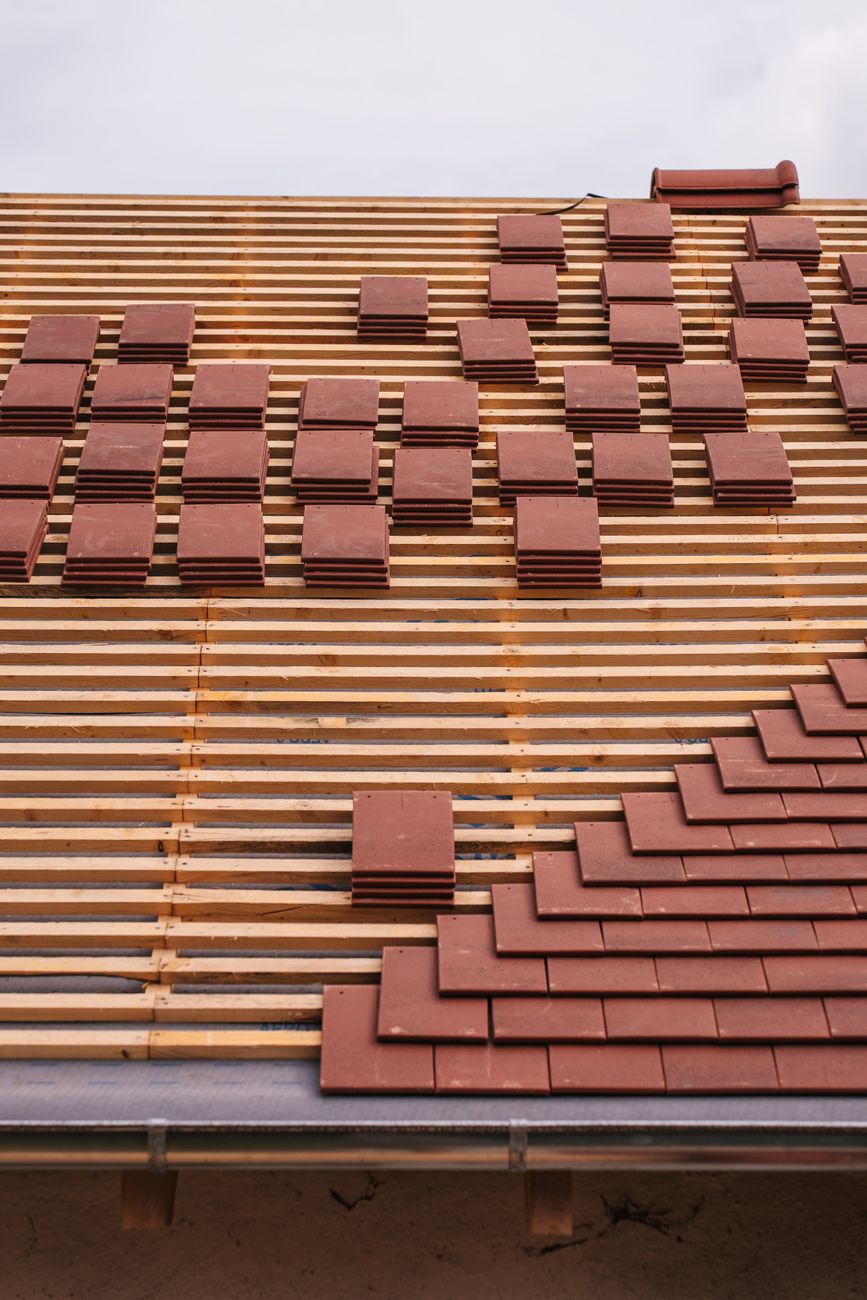 Photo by Clément Proust on Pexels
Why Ventilation Belongs in the Same Conversation as Materials
Attic ventilation doesn't show up on a shingle order, but it directly affects how long the roof above it lasts. A roof deck that traps heat and moisture in summer, or that lets warm, moist indoor air condense against a cold underside in winter, ages shingles from underneath regardless of how good the shingles themselves are. The U.S. Department of Energy publishes guidance on balanced intake and exhaust ventilation for exactly this reason: it's a durability issue, not a comfort issue.
A quote that includes ridge and soffit vent upgrades will look higher than one that doesn't, and it's worth asking directly whether ventilation was priced in or assumed to already be adequate.
Insurance and Wind Rating Change the Materials List Too
In regions with wind or hail exposure, insurers increasingly ask about the wind rating and impact resistance of the shingles installed, and some offer premium credits for roofs that meet specific standards. The Insurance Institute for Business & Home Safety maintains research on which roofing assemblies actually hold up under real wind and hail testing, separate from what a shingle's marketing label claims. A contractor quoting a higher-rated shingle line isn't necessarily overcharging. They may be pricing toward a product that keeps a homeowner's insurance premium lower for years afterward, which is worth knowing before assuming the cheaper quote is the better deal.
 Photo by Nikita Nikitin on Pexels
Permits and Code Requirements Vary More Than People Expect
Roofing permit requirements differ by municipality, and in some areas a full tear-off past a certain number of existing layers triggers a mandatory inspection before the new roof can legally go down. This isn't universal, so a quote from a contractor working in a permit-light area can look artificially lower than one working somewhere with stricter enforcement, even for the exact same physical job. It's worth a quick call to the local building department before assuming a quote is padded with unnecessary fees.
Financing Changes the Comparison Too
A roof replacement is rarely paid in cash out of a checking account, and once financing enters the picture, the "cheaper" quote isn't always cheaper. A lower total paired with a contractor's in-house financing at a high rate can cost more over time than a higher total paid through a home equity line at a lower one. The Consumer Financial Protection Bureau publishes plain-language guidance on comparing home improvement loan terms, including the kind of fine print that turns an attractive monthly payment into an expensive total cost.
It's worth running both the materials-and-labor comparison and the financing comparison separately, because a contractor pushing their own financing option has an incentive to make the top-line number look smaller, not necessarily to make the total cost lower.
 Photo by Jakub Zerdzicki on Pexels
When a Second Opinion Is Worth the Extra Call
If two quotes disagree sharply enough that the math doesn't reconcile even after accounting for pitch, waste, and layers, an independent home inspector can walk the roof and report back without any incentive to sell a job either way. The International Association of Certified Home Inspectors maintains a directory of inspectors trained specifically to evaluate roofing condition, flashing, and ventilation as part of a standard inspection, separate from any contractor bidding on the repair.
This costs more upfront than just picking a quote, but it's a small expense next to a job that runs thousands over budget because nobody caught a missing ventilation upgrade or an underestimated layer count before the crew showed up.
Reading a Quote Line by Line Instead of Comparing Totals
The fastest way to make sense of a gap between two quotes is to stop comparing bottom-line numbers and start comparing the line items feeding into them: the calculated roof area after pitch adjustment, the waste percentage applied, the number of tear-off layers assumed, and whether underlayment, drip edge, and ridge cap are itemized separately or bundled into a vague "materials" line. A lower total that's missing three of those line items isn't actually a better price, it's an incomplete one that will grow once the crew is already on the roof.
Running your own numbers before a contractor walk-through gives you a baseline to check their math against, instead of trusting a total you have no way to independently verify.
Where the Free Calculator Fits
The free Roofing Calculator by EvvyTools takes your roof dimensions and pitch and works out squares, bundles, underlayment, drip edge, ridge cap, and nails with the slope factor already applied, so you have a real baseline before a contractor's number ever shows up. Comparing your own estimate against a written quote turns a confusing wall of numbers into a short list of specific questions to ask.
For more tools built the same way, browse the EvvyTools tools directory, or check the EvvyTools blog for more breakdowns like this one. Start from the EvvyTools homepage to see the full catalog of free calculators.