You run spell check, every word gets a clean pass, and you hit send. Then a colleague points out that "their" should have been "there," or that a sentence has two subjects arguing with one verb. Nothing about that error involved a misspelled word, which is exactly why the checker never flagged it.
Spell check and grammar check solve two completely different problems, and most writers only discover the gap between them after an error has already gone out the door.
Spell Check Only Ever Answers One Question
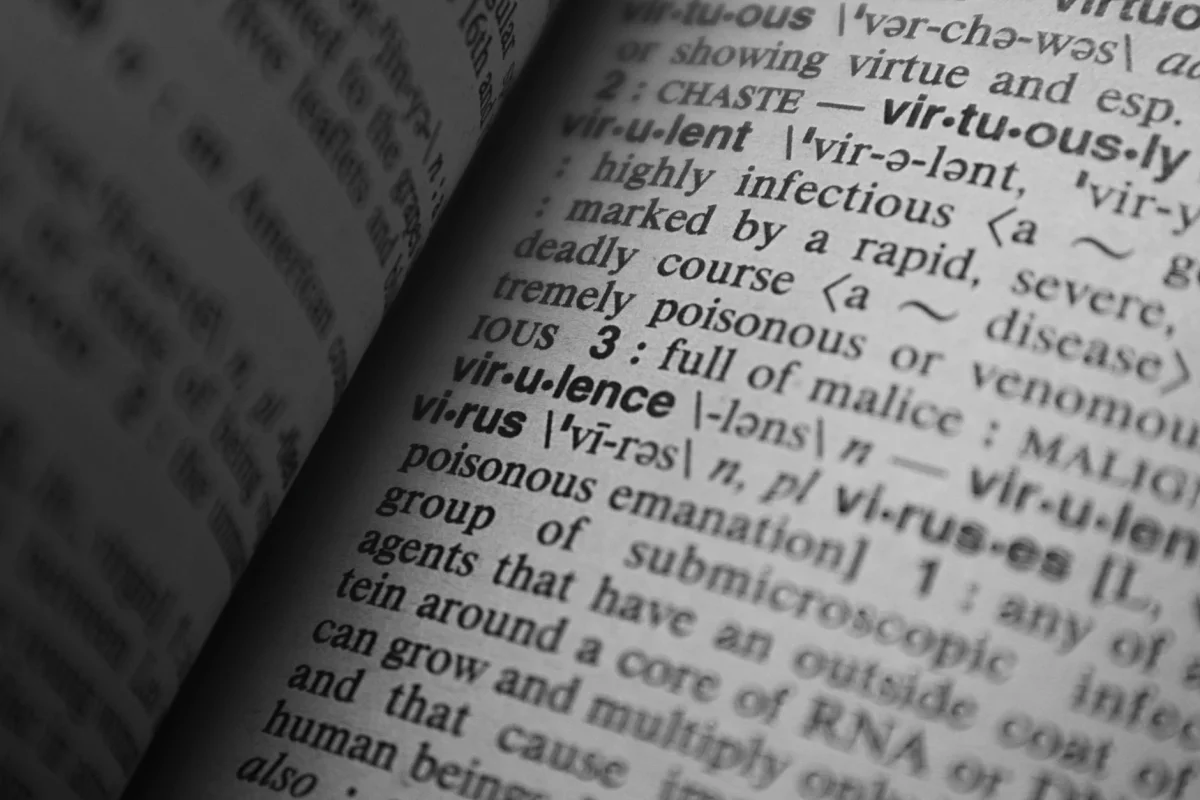
A spell checker compares each word you typed against a dictionary of correctly spelled words. That's the entire mechanism. If "there," "their," and "they're" are all real, correctly spelled words, a spell checker has done its job the moment it confirms the word exists, regardless of whether it's the right word for that sentence.
This is why homophone mix-ups, wrong verb tenses, and subject-verb agreement errors sail through spell check untouched. Every individual word is spelled correctly. The sentence is still wrong, and spell check has no mechanism for noticing, because checking spelling was never the same task as checking grammar.
The Errors That Live in This Blind Spot
A handful of error types account for most of what spell check misses, and they show up in almost every kind of writing, not just casual emails.
Homophones
"Its" versus "it's," "affect" versus "effect," "then" versus "than." Each pair contains two entirely valid words, so a dictionary-based check passes either one without hesitation. Merriam-Webster documents these pairs clearly, but knowing the rule and catching the slip in your own fast-typed draft are two different skills, especially under deadline pressure.
Subject-Verb Agreement
"The list of items are on the table" sounds almost right when you read it quickly, because "items" sits right next to "are." The actual subject is "list," which is singular, so the verb should be "is." Spell check has no concept of grammatical subjects at all, so this entire category of error is invisible to it by design.
Wrong Verb Tense
Shifting from past to present tense mid-paragraph, or using "had went" instead of "had gone," produces sentences made entirely of real words in a grammatically broken order. A spell checker sees two correctly spelled words and stops looking.
Comma Splices and Dangling Modifiers
"I finished the report, I sent it to the team" joins two complete sentences with only a comma, a comma splice that's grammatically incorrect even though every individual word is fine. "Walking into the office, the coffee machine was broken" attaches the opening phrase to the wrong noun, since the coffee machine wasn't the one walking in. Purdue's Online Writing Lab has a clear reference on both patterns if you want the formal grammar terms behind them.
Neither error involves a misspelled word, and neither one trips a spell checker. They're exactly the category of mistake that reads fine at a glance and only becomes obvious once someone else parses the sentence literally.
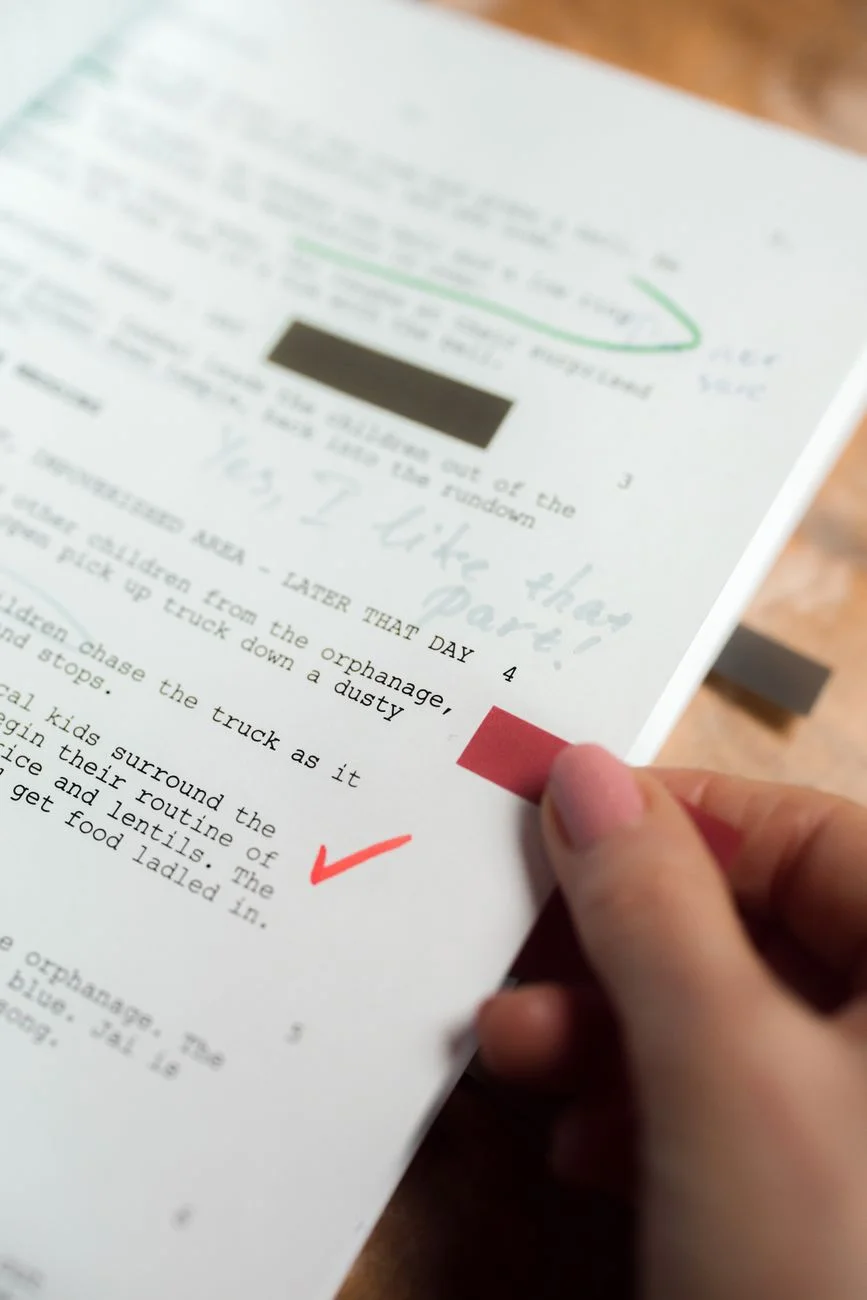
 Photo by cottonbro studio on Pexels
Why Rule-Based Grammar Checkers Only Get You Partway There
Early grammar checkers tried to close this gap with hand-written rules: flag "their" near certain verbs, check for a small list of common tense mistakes, look for a handful of known agreement patterns. That approach catches the errors someone thought to write a rule for, and misses everything else, including any error that happens to be phrased in a way the rule-writer didn't anticipate.
Rule-based systems also struggle with context. "The data is clear" and "the data are inconsistent across studies" are both defensible depending on whether you're treating "data" as a mass noun or a plural, and a rigid rule can't weigh that kind of judgment call the way a model trained on real usage patterns can.
How AI-Based Grammar Checking Actually Works
Modern grammar checking uses models trained on enormous volumes of real, edited text, learning statistical patterns for what correct grammar actually looks like in context rather than following a fixed list of if-then rules. That's the difference between a system that catches only the errors someone predicted in advance and one that recognizes an error pattern it has effectively seen thousands of variations of before.
This matters most for exactly the errors spell check can't touch: a homophone used in the wrong grammatical role, a verb that doesn't agree with a subject several words earlier in a long sentence, a tense that drifted without the writer noticing. Context-aware checking looks at the whole sentence structure, not just whether each individual word exists in a dictionary.
Passive Voice: A Style Flag, Not Always an Error
Passive voice deserves a specific callout because it's frequently over-flagged. "The report was reviewed by the committee" isn't grammatically wrong, it's a legitimate construction that sometimes reads more naturally than the active alternative, especially when the actor doing the action matters less than what happened to the object. Wikipedia's overview of passive voice covers the grammar clearly if you want the full mechanical breakdown.
The useful distinction is between passive voice used deliberately, for emphasis or because the actor is unknown or unimportant, and passive voice that's crept in by accident and made a sentence needlessly indirect. A good grammar checker flags passive constructions as a suggestion worth a second look, not as an automatic error to eliminate on sight.
Wordiness and Clichés Live One Layer Above Grammar
Even a grammatically perfect sentence can still be a bad sentence. "Due to the fact that" is grammatically fine and also six words doing the job of one word: "because." Clichés like "at the end of the day" or "think outside the box" are grammatically correct and also signal to a reader that the writer reached for a stock phrase instead of a specific thought.
This is a separate layer from correctness, closer to style than grammar, but it's the layer that determines whether writing actually reads well once every grammar error has already been fixed. The federal Plain Language guidelines make essentially this same case for clear, direct writing over padded phrasing, and the logic applies just as much to a blog post as it does to a government form.
"The writers who improve fastest aren't the ones who memorized every grammar rule, they're the ones who started noticing the difference between a sentence that's merely correct and one that actually reads clean. A checker that flags both layers, correctness and wordiness, teaches that instinct a lot faster than proofreading alone does." - Dennis Traina, founder of 137Foundry
Telling a Real Error Apart From a Style Preference
Not every flag from a grammar checker points at something objectively wrong. "Which" versus "that" in a restrictive clause, whether to use the Oxford comma, whether to start a sentence with "and" or "but," these are style conventions with defenders on more than one side, not hard grammar rules with a single correct answer.
The useful mental model is a two-tier one. Tier one is genuinely broken grammar: subject-verb disagreement, a comma splice, a homophone in the wrong role. These have a correct answer regardless of style guide. Tier two is a style preference: passive voice, sentence length, whether "data" takes a singular or plural verb. A good checker should distinguish between the two, flagging tier one as an error and tier two as a suggestion you're free to overrule.
Treating every flag as equally mandatory is how writers end up over-editing a piece into something flatter and more uniform than it needs to be. The goal is catching real errors, not sanding every sentence down to the same shape.
A Practical Draft-Check-Revise Workflow
The most efficient way to use any grammar checker is to keep it out of the first draft entirely. Write the draft focused on getting the ideas down, then run a dedicated grammar pass afterward. Checking every sentence as you type interrupts the thinking part of writing and rarely catches more than checking the finished draft does in one focused pass.
Once the draft exists, run it through a grammar checker that flags homophones, agreement errors, tense shifts, and wordiness together, then work through the flagged items in order rather than jumping around. Fixing errors in the order they appear keeps you from accidentally missing one further down the page while you're focused on an earlier fix.
What to Actually Look For in a Grammar Checker
Not every grammar tool checks for the same things, and a few capabilities separate a genuinely useful checker from one that just underlines a handful of obvious typos:
- Context-aware homophone detection. Catching "their" used where "there" belongs requires understanding the sentence's grammar, not just confirming the word is spelled correctly.
- Subject-verb agreement across long sentences. The further the subject sits from its verb, the more likely a rule-based checker misses the mismatch entirely.
- Passive voice flagged as a suggestion, not an automatic error. A checker that hard-flags every passive sentence produces more noise than help.
- Wordiness and clichés alongside grammar. Correctness and clarity are different problems, and a checker that only handles one leaves the other half of the editing work to you.
- Clear explanations, not just underlines. A flag with no explanation of why teaches you nothing for the next draft. A flag with a short reason builds the instinct over time.
A tool missing more than one or two of these reintroduces exactly the blind spot spell check already has, just with a slightly bigger dictionary behind it.
Where This Fits Into a Regular Writing Habit
None of this requires becoming a grammar expert before you can write confidently. It requires running the right check at the right stage: draft first, then a dedicated grammar and style pass before anything goes out, whether that's an email, a blog post, or a report someone else is going to read closely.
The free AI Grammar Checker by EvvyTools checks for homophones, subject-verb agreement, tense consistency, passive voice, and wordiness together, with color-coded inline highlighting and a writing score so you can see exactly what changed between a rough draft and a clean one. For anyone who sends writing out regularly and wants confidence that "spell check passed" actually means the sentence is right, that combined check closes the gap a spelling-only pass leaves wide open.
For more free writing and editing utilities like this one, browse the EvvyTools tools directory, or check the EvvyTools blog for more breakdowns of how the tools under the hood actually work. You can also start from the EvvyTools homepage to see the full catalog of free tools.