Someone at the party plugs their night into a phone calculator: three beers, two hours, one hundred and sixty pounds. The screen says 0.06. That number gets treated like a verdict, a green light to drive home, when it was never built to carry that much weight in the first place.
A blood alcohol content estimate is a genuinely useful planning tool. It is also a rough model built on averages, not a measurement of what is actually happening in your bloodstream at that exact moment. Understanding the gap between those two things matters more than the decimal point most people fixate on.
What Actually Goes Into the Estimate
Every BAC calculator, including the free one on EvvyTools, runs on some version of the Widmark formula: total alcohol consumed, body weight, biological sex, and time elapsed since the first drink. Feed those four numbers in and the tool spits out a percentage.
The formula assumes alcohol distributes evenly through your body water, using a fixed ratio that approximates how much of your body mass is water versus fat and muscle. That ratio is where the first source of error creeps in, because it is a population average, not a measurement of your specific body composition on that specific night. Two people who are the same height and weight can still have meaningfully different body water percentages depending on muscle mass, hydration, and a handful of other factors the calculator has no way to know.
 Photo by Cihan Yüce on Pexels
Why "The Same" Drinks Produce Different Numbers
Two friends order what they'd both call three drinks. One had three five-ounce glasses of wine at 12 percent alcohol by volume. The other had three pours at a bar that measured closer to seven ounces each, from a bottle running 14.5 percent. Those are not the same three drinks, even though both people would answer "three" if you asked how many they'd had.
Standard drink sizes exist as a reference point, not a guarantee of what actually landed in the glass. A home-poured cocktail, a craft beer at 8 percent instead of the 5 percent a calculator assumes, or a generous restaurant pour can each push real alcohol content well past what a person reports when they're estimating from memory. Wikipedia's overview of alcohol by volume is a decent primer on just how much that percentage varies between beverage types, and it's worth a skim before trusting any self-reported drink count too literally.
The Legal Limit Isn't the Same Thing as Safe
It's easy to treat 0.08 as a line between fine and not fine, mostly because it's the number attached to a legal consequence. Actual impairment starts well before that. Reaction time, judgment, and coordination all measurably decline starting around 0.02 to 0.03, long before anyone would call a person visibly drunk.
The National Highway Traffic Safety Administration has published research for years showing that crash risk climbs steadily well under the legal threshold, not in a sudden jump right at 0.08. Treating the legal limit as the safety threshold means accepting a level of impairment that already measurably affects driving, just one that happens to stay on the right side of a specific legal line.
Time, Food, and the Myths That Don't Actually Work
Coffee doesn't sober anyone up. Neither does a cold shower, a big glass of water, or a brisk walk around the block. Alcohol leaves your system at a roughly fixed rate as your liver metabolizes it, somewhere around one standard drink per hour for most people, and nothing you do in the meantime speeds that process up in any meaningful way.
Food does change things, but not the way people think. Eating before or during drinking slows absorption, which can lower the peak BAC a person reaches and spread that peak out over more time. It does not reduce the total amount of alcohol you'll eventually process, and it does not make the number on a calculator wrong. What it changes is the shape of the curve, not the area under it.
 Photo by JEMPACT Workshop on Pexels
Where Calculator Estimates Drift From Reality
A handful of quiet assumptions sit underneath every BAC estimate, and each one can pull the real number away from the calculated one in either direction. Self-reported drink counts are frequently off, sometimes because of genuinely fuzzy memory and sometimes because a generous pour just doesn't register the same as a measured one.
Metabolism rate varies by individual, by how recently someone has eaten, and even by how often they drink regularly, since tolerance and metabolic adaptation are real physiological effects. Time-of-first-drink accuracy matters too. A calculator working off "started drinking around 9" produces a less reliable estimate than one built on an exact timestamp, especially for someone whose drinking was spread unevenly across the evening rather than paced consistently.
None of this means the estimate is useless. It means the number is a midpoint of a range, not a precise reading, and the width of that range depends on how confidently you can answer the questions the calculator is asking.
Feeling Sober Isn't the Same as Being Sober
Subjective impairment and measured impairment separate faster than most people expect. Adrenaline, adrenaline-fueled excitement, loud environments, and simple overconfidence can all make a person feel considerably more in control than their actual BAC would suggest. This is part of why "I feel fine" is such an unreliable gut check, the same substance that's impairing judgment is also the thing being asked to judge whether it's impairing anything.
This works in the other direction too. Someone who hasn't eaten all day, who is exhausted, or who is more sensitive to alcohol than usual can feel considerably more impaired than a calculator's number would suggest, even when the math checks out. Both directions point to the same conclusion: the felt sense of sobriety is a bad instrument for measuring an objective quantity, whether it's overestimating or underestimating what's actually happening.
What a Breathalyzer Measures That a Calculator Can't
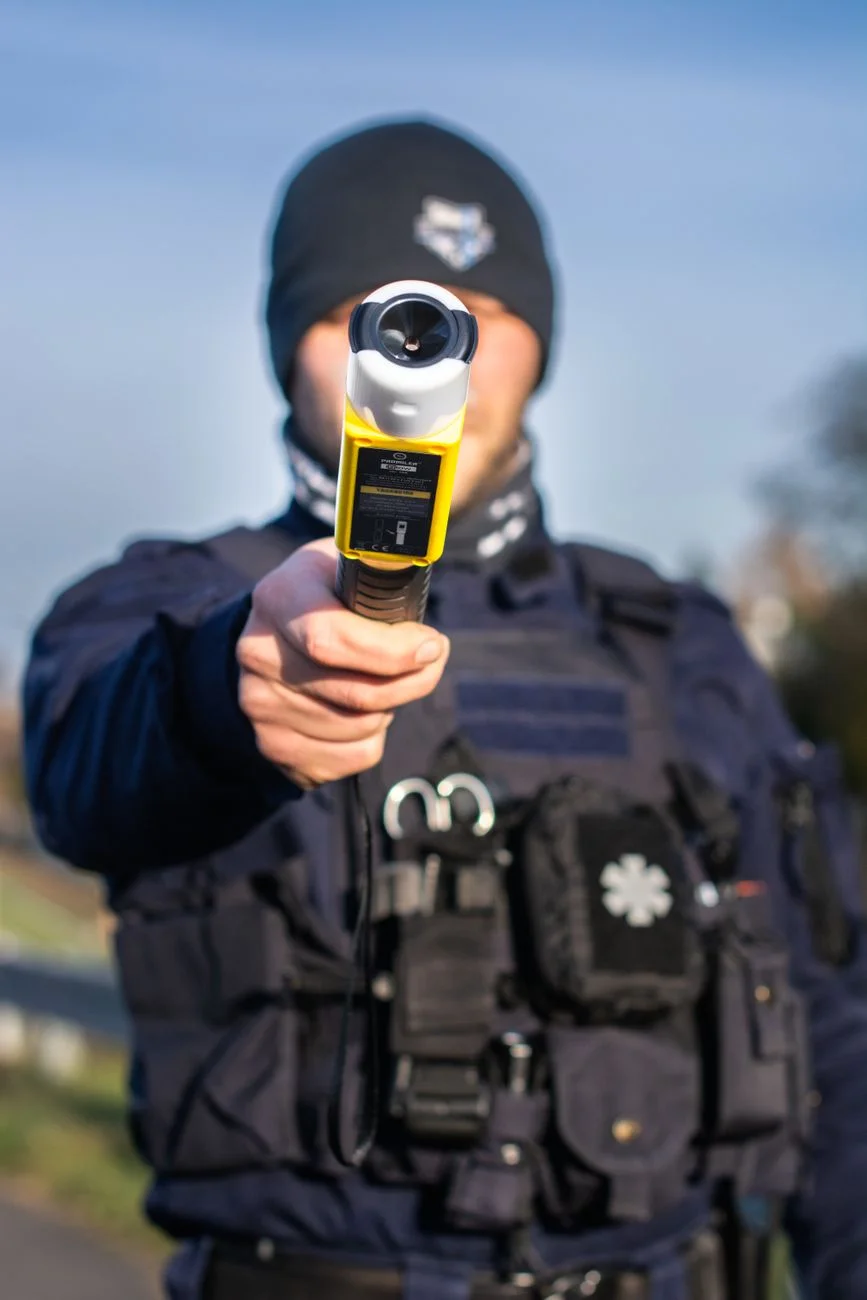
A calculator estimates. A breathalyzer measures, or at least measures something closely correlated with actual blood alcohol content, by analyzing alcohol vapor in exhaled breath. That's a meaningful difference, not a matter of degree. One is inferring a number from reported inputs run through a formula built on population averages. The other is sampling something physically present in your body at that moment.
Consumer breathalyzers vary a lot in accuracy, and even professional-grade units require calibration to stay reliable over time. Still, a decent breathalyzer reading and a calculator estimate are answering fundamentally different questions, one is measurement with a margin of error, the other is a prediction with a wider and less predictable one. If a real decision is riding on the answer, a measurement beats a prediction every time, and neither one should be asked to do the other's job.
What This Kind of Calculator Is Actually Good For
Used correctly, a BAC calculator is a planning tool, not a diagnostic instrument. It's genuinely useful before a night out: run a couple of scenarios ahead of time, see roughly how many drinks over what stretch of time would put you near a threshold you want to stay well clear of, and use that as a rough budget for the evening rather than a real-time readout you check between rounds.
It's a poor tool for the opposite use case, checking after the fact whether it's safe to get behind the wheel right now. At that point you're plugging uncertain, alcohol-affected memory into a formula built on averages, and using the output to make a decision that has zero margin for error. The Centers for Disease Control and Prevention frames impaired driving as entirely preventable, and the actual prevention step is deciding on a ride home before the first drink, not running the math afterward.
 Photo by Esra Erdem on Pexels
When to Trust the Number, and When to Just Not Drive
If a calculator estimate comes back anywhere close to a limit you care about, that closeness is the signal, not the specific decimal. A wide margin of error around a number near 0.07 means the real figure could plausibly sit above 0.08, and there's no way to know which side of the line you're actually on without a breath or blood test.
The safer read of a borderline number isn't "technically under the limit." It's "close enough that the estimate can't be trusted to answer this specific question." The National Institute on Alcohol Abuse and Alcoholism publishes plain-language material on how individual factors affect alcohol processing, and it's a good next stop for anyone who wants the physiology behind these numbers rather than just the formula.
Using the Free Calculator the Right Way
The BAC Calculator on EvvyTools walks through drinks, weight, sex, and time the same way described above, and shows current BAC alongside an estimated time back to sober. It's built for planning ahead of a night out, sanity-checking a pacing plan, or understanding roughly how long a given evening's drinking will keep affecting you, not for settling a real-time argument about whether it's fine to drive right now.
Treat the output as a range with a fuzzy edge, not a precise reading, and the tool does exactly what it's meant to do.
The Takeaway
A BAC calculator turns a handful of rough inputs into a specific-looking number, and that specificity is part of what makes it easy to over-trust. Blood alcohol content itself is a real, measurable quantity, but a calculator's estimate of it is only as good as the drink counts, timing, and body-composition assumptions that went into the formula.
Use it to plan ahead, not to grade a decision you've already made. When the estimate lands anywhere near a line that matters, treat the uncertainty as the answer rather than the decimal point. The EvvyTools tools directory has more calculators built the same way, useful for planning, honest about their own limits, and the EvvyTools blog has more breakdowns like this one for numbers that look more precise than they actually are.