

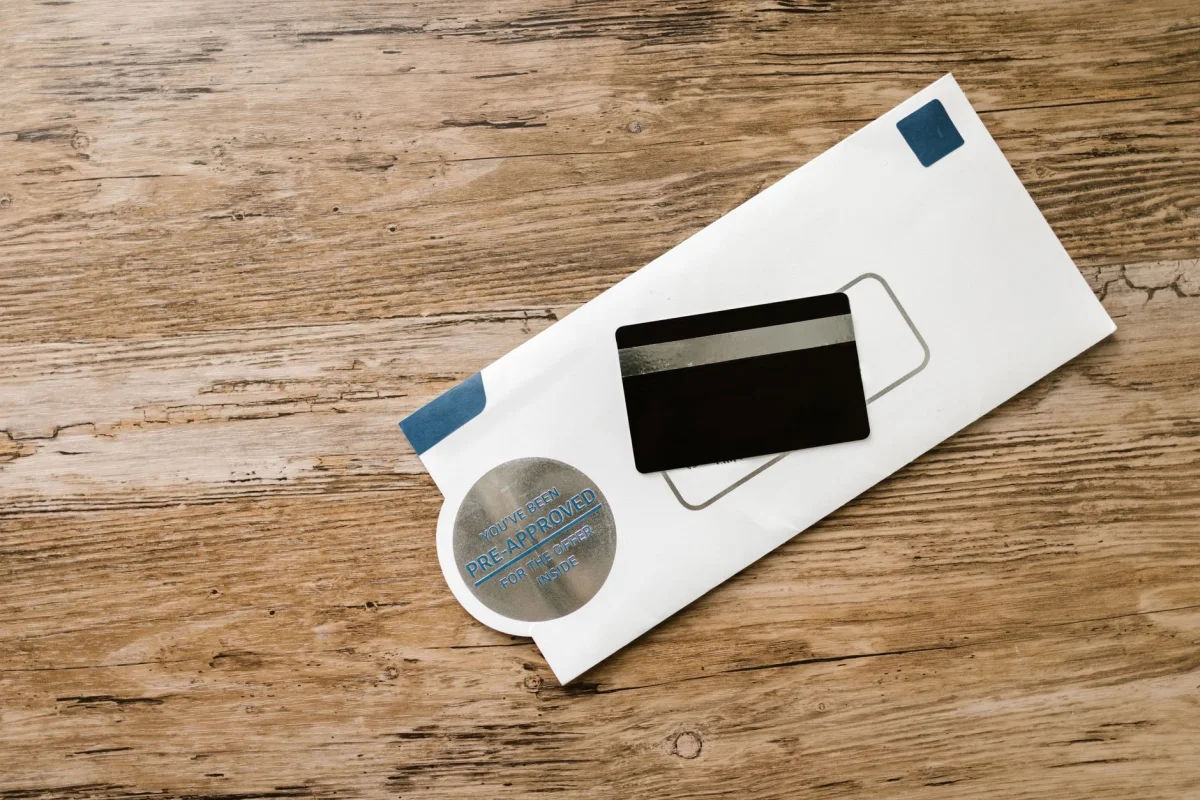
Your card says 24 percent. Your statement says you were charged $79 in interest last month on a balance of about $4,000. Those two numbers do not look like they belong together, because 24 percent of $4,000 is $960 a year, and a twelfth of that is $80, which is close but never exactly right. The small gap between what you expect and what shows up on the statement is where most of the confusion about credit card interest lives.
The reason is that the annual rate on your card is a label, not the number the issuer actually uses. Behind the scenes, interest is calculated every single day, on whatever balance you carried that day. Once you understand that mechanism, a lot of puzzling behavior starts to make sense: why a payment made early in the cycle helps more than one made on the due date, why a balance that "barely moves" is really just interest eating your payment, and why two people with the same rate can pay different amounts.
This guide walks through the machinery step by step, with one worked example you can follow with a pencil.
What the APR on Your Card Actually Means
APR stands for annual percentage rate, and it is the yearly cost of carrying a balance, expressed as a percentage. The general idea is covered in the annual percentage rate overview, and the same concept shows up on loans and mortgages. On a credit card, though, the APR is not applied once a year. It is chopped into small daily slices.
Most cards also carry more than one APR. Purchases usually have one rate, cash advances often have a higher one, and balance transfers may have a separate promotional rate that expires. Each type of balance can be tracked and charged separately, which is one reason a statement can show several interest lines instead of one.
The rate on your card can also move. Many cards use a variable rate tied to a benchmark, so the number printed in your agreement today may not be the number in effect six months from now. Your statement lists the rates that applied during that billing period, and that is the figure worth reading.
From Annual Rate to Daily Rate
The conversion is simple division. Take the APR and divide it by 365 (some issuers use 360, which is slightly more aggressive) to get the daily periodic rate. A 24 percent APR becomes about 0.0658 percent per day.
Apply that to a $4,000 balance and you get roughly $2.63 of interest for each day the balance sits there. Over a 30 day billing cycle that adds up to about $78.90. That is the number you would actually see, and it is why the statement figure lands near, but not exactly on, one twelfth of the annual amount. Cycles with 31 days cost slightly more than cycles with 28.
 Photo by Matheus Bertelli on Pexels
This daily slicing is also why interest feels invisible. A charge of $2.63 a day does not register as anything you would notice on a single morning. It is only when the month closes that the daily pennies show up as a lump sum.
Average Daily Balance: The Number That Gets Multiplied
Issuers do not multiply the daily rate by your ending balance. Most use a method called average daily balance. They record your balance at the end of each day in the cycle, add those figures up, and divide by the number of days. The result is multiplied by the daily rate and by the number of days.
The Consumer Financial Protection Bureau publishes plain-language material on how card issuers describe these calculations, and your cardholder agreement spells out which version your issuer uses. Some methods include new purchases from the day they post, others exclude them, and the details change the result by a few dollars.
What matters for your decisions is the direction of the effect. Anything that lowers your balance earlier in the cycle lowers the average, and a lower average means less interest. Anything that raises the balance early, such as a large purchase on day two, raises the average for the entire cycle.
A Worked Example With Real Arithmetic
Suppose you start a 30 day cycle with a $4,000 balance at 24 percent APR and make no new purchases. If you do nothing until the last day, the average daily balance is $4,000. The interest is $4,000 times 0.24, divided by 365, times 30, which comes to $78.90.
Now suppose you pay $1,000 on day 10 instead. For 10 days the balance is $4,000, and for the remaining 20 it is $3,000. The average daily balance is (10 times 4,000 plus 20 times 3,000) divided by 30, which is $3,333.33. The interest becomes $3,333.33 times 0.24, divided by 365, times 30, which is $65.75.
Same payment, same card, same rate, and the only change was the date. Paying on day 10 instead of day 30 saved about $13.15 in one cycle. That is not life changing on its own, but it repeats every month, and it grows with the size of the balance.
 Photo by Leeloo The First on Pexels
How Interest Gets Added to Itself
There is one more detail that surprises people. Most card issuers compound interest daily, which means each day's interest charge is added to the balance, and the next day's charge is calculated on that slightly larger number. The general mechanism is described in the compound interest article.
For a 24 percent APR compounded daily, the effective annual cost works out to a little over 27 percent if you never pay the balance down. The quoted APR and the effective rate are different numbers, and the gap widens as the rate climbs. This is a big part of why high rate balances are so stubborn: the interest itself starts generating interest.
In practice, most cards bill interest at the end of the cycle and add it to the balance then, so the compounding you experience is usually month to month rather than strictly day to day. The principle is the same. Leave interest unpaid and it joins the balance that future interest is calculated on.
The Grace Period and Why It Disappears
Most cards offer a grace period on new purchases. If you pay the full statement balance by the due date, you are generally not charged interest on those purchases. That is why some people use a card for years without ever paying a cent in interest.
The catch is that the grace period is conditional. If you carry any balance past the due date, you typically lose it, and new purchases begin accruing interest from the day they post rather than from the end of the cycle. That is why a partial payment can feel confusing: you owe interest on the old balance, and you are also paying interest on groceries you bought yesterday.
Getting the grace period back usually means paying the full statement balance for a cycle or two, though the exact rule depends on the issuer. Your cardholder agreement is the authority here, and the Federal Reserve publishes consumer material describing the general rules that apply to card disclosures.
Why Your Balance Barely Moves After a Payment
Here is the pattern that frustrates people most. You pay $150 on a card with a $4,000 balance, and a month later the balance is $3,930. It feels like most of your payment vanished.
It did, in a sense. Of that $150, about $79 went to the month's interest, and only about $71 reduced what you actually owe. At a higher balance or a higher rate, the split gets worse, and in the extreme case a payment close to the minimum can barely exceed the interest itself.
This is the practical reason to look at interest as a monthly bill, not an abstract percentage. If the interest charge is $79 and your payment is $150, then 53 percent of your effort is going to the issuer. Seeing that number each month changes how most people think about sending extra.
How to Read Your Own Statement
Pull up your latest statement and look for three things. The first is the list of APRs, usually shown in a table with separate rows for purchases, cash advances, and balance transfers. The second is the interest charged this period, shown as a dollar figure. The third is the balance subject to interest rate, sometimes labeled average daily balance.
With those three, you can check the issuer's math. Divide the APR by 365, multiply by the average daily balance, and multiply by the number of days in the cycle. If your result lands within a dollar or two of the interest charged, you have confirmed how your card works and can predict next month with confidence.
If the numbers are far apart, look for a second balance type with a different rate, a fee that was folded into the total, or a promotional rate that expired mid-cycle. The National Foundation for Credit Counseling is one nonprofit resource for people who want a second set of eyes on a confusing statement.
Putting the Mechanics to Work
Once you can predict the interest, you can run the numbers forward instead of guessing. Plug your balance, APR, and payment into a Credit Card Payoff Calculator and it will show the month by month split between interest and principal, the payoff date, and the total interest cost. Changing the payment amount shows right away how much a bigger payment shortens the timeline.
That kind of what-if testing is where the daily interest math becomes useful. For example, you can see what happens if you add $50 a month, or if you make one payment mid-cycle instead of waiting for the due date. The calculator uses a monthly model, so it will not reproduce your issuer's daily figures to the penny, but it gets you close enough to compare strategies.
If you are working through more than one account, the EvvyTools tools directory has other planning calculators, and the EvvyTools blog covers related topics such as minimum payments and payoff planning in more depth.
 Photo by Weavehall Collective on Pexels
Small Habits That Lower What You Pay
A few habits follow directly from the mechanics. Pay early in the cycle rather than on the due date when you can, since every day a dollar stays on the balance it earns interest for the issuer. If your income arrives twice a month, splitting your card payment into two smaller ones can lower the average daily balance a little.
Avoid putting new purchases on a card you are paying down if you can, because new spending raises the average and, once the grace period is gone, begins accruing interest at once. If you must use it, keep the purchases small and pay them off right away.
Check whether a lower rate is available to you. Asking an issuer about a rate reduction, or comparing a balance transfer offer, can matter more than any timing trick. Read the transfer fee and the promotional end date before deciding, and remember that a free credit report from AnnualCreditReport.com lets you verify the accounts and balances you are working from.
The Short Version
A card's APR is divided into a daily rate and applied to your average daily balance, which means the day you pay matters and every dollar removed early saves interest for the rest of the cycle. Most cards also let interest compound, so the effective cost is higher than the number on the front of the statement. The grace period protects you only while you pay in full, and it vanishes quickly when you do not.
None of this requires advanced math. A pencil, your latest statement, and the division described above are enough to see exactly where each month's interest comes from, and from there the question of how fast to pay the balance down becomes a plan instead of a worry.