

Two puppies from the same season can look like they are on the same path. One is a Chihuahua mix that fits in a coat pocket, and the other is a Great Dane that already outweighs the coffee table. Ten years later, one of them may still be chasing a ball in the yard, and the other may have been a senior citizen for a good three or four years.
That gap is not a quirk of a few unlucky breeds. It is one of the most consistent patterns in dog health, and it quietly changes when you should book senior checkups, switch foods, and start paying attention to stiff mornings. Most owners find out about it only after the fact.
The Old 7-to-1 Rule Hides the Real Pattern
Nearly everyone grew up hearing that one dog year equals seven human years. It is easy to remember and it sounds scientific, but it treats every dog as the same animal. A single multiplier cannot describe a dog that matures in under two years and may not reach old age until its early teens, let alone describe two dogs that differ by a factor of fifty in body weight.
The rule also gets the early years wrong. Dogs reach physical maturity far faster than seven years of human development would suggest, which is why a one-year-old dog is already a young adult rather than a seven-year-old child. A fixed ratio flattens all of that into a straight line, when the real curve rises steeply and then flattens.
Size Sets the Pace of Aging
Across dog breeds, smaller dogs tend to live longer on average than larger ones, which is the reverse of what you see when comparing different species. A mouse lives a short life and an elephant a long one, but within the single species of dog, the heavy breeds tend to age faster. The domestic dog is the most physically varied mammal species we have, and that variation extends to lifespan.
Researchers have proposed several explanations, including faster growth in large puppies and the cellular cost of building and maintaining a much larger body. None of this means a large dog is doomed to a short life. It means the calendar is not a reliable guide, and that a seven-year-old Mastiff and a seven-year-old terrier are at very different points in life.
 Photo by Griffin Wooldridge on Pexels
What the Life Stages Look Like by Size
Veterinary groups describe a dog's life in stages rather than a single number: puppy, young adult, mature adult, senior, and geriatric. What changes with size is when each stage begins. The American Animal Hospital Association publishes canine life stage guidelines that treat size as a core part of that timeline, and the broad picture is easy to describe even without exact cutoffs.
Small dogs commonly reach the senior stage somewhere in their later single digits to around ten or eleven. Medium dogs tend to get there a little earlier. Giant breeds can be considered senior at around six or seven, an age when a small dog is still firmly in its prime. If you want a figure for your own dog, the exact threshold depends on breed, health history, and what your veterinarian sees in the exam room.
Why the Same Age Means Different Things
It helps to think of a dog's age in two ways. The first is chronological age, the number of birthdays. The second is physiological age, which reflects how worn the body is and how close it is to the typical life stages for its size. Size changes the exchange rate between the two.
A useful way to picture it is a relay with different lengths of track. Every dog runs the same stages in the same order, but a small dog runs a long, gentle stretch through middle age while a giant breed runs the same stretch in half the time. That is why a cheerful, active six-year-old Bernese mountain dog may already be dealing with problems that a six-year-old Yorkshire terrier will not meet for years.
Where a Calculator Fits In
An age conversion tool is not a diagnosis, and it will not replace a veterinary exam. What it does well is turn a confusing question into a concrete one. Instead of asking whether your dog counts as old yet, you enter the dog's age, size category, and breed, and you get a human-equivalent age and a life stage you can use as a conversation starter at the next appointment.
The free dog years calculator by EvvyTools uses size-aware aging curves rather than a flat multiplier, and it also shows a rough life stage and a breed-based expectancy. Try the same age at small, medium, and giant sizes, and the difference jumps out in a way no paragraph can match.
 Photo by Tima Miroshnichenko on Pexels
When Senior Checkups Should Start
A common pattern for healthy adult dogs is one wellness visit per year. The usual advice for senior dogs is to move to visits about every six months, because changes in weight, joints, teeth, and organ function can progress faster than a year-long gap allows you to catch. The American Veterinary Medical Association is a good starting point for reading about preventive care and what a wellness exam typically covers.
Where size matters is the starting line. A large or giant breed may need to move to a senior schedule years before a small dog does, so waiting until age ten would mean missing most of the useful window. Ask your veterinarian directly at the next visit, using a sentence such as "given his size, when should we move to twice a year?", and let them set the date based on the dog in front of them.
Signs That Often Get Written Off as Just Getting Older
One of the biggest problems with calling a dog old is that it makes real problems look normal. Slowing down on walks, hesitating at stairs, sleeping more, drinking more water, and losing interest in meals can all be written off as age. Some of them are, but many are treatable conditions that respond well to early attention.
Joint pain is a good example. A dog with sore hips often does not whimper. It simply stops jumping into the car, shortens its walks, or gets up slowly after naps. If you tell yourself the dog is just old, you may wait a year for a problem that a conversation with your vet could ease now. Treat any change as a question to ask, not a verdict.
Food, Weight, and Activity Shift With Age
Nutrition needs change as a dog moves through life stages, and the right adjustment depends on the individual animal. Some older dogs gain weight easily because they move less, while others lose muscle and need more attention to protein. Large breeds are also prone to carrying extra weight on already stressed joints, which makes keeping a lean body condition one of the most practical things an owner can control.
Rather than switching foods on a hunch at a certain birthday, ask your veterinarian to score your dog's body condition and muscle at each visit. That gives you a real trend over time. The calorie question is also personal, and a feeding guide on a bag is only a starting point, since the same dog may need noticeably different amounts in different seasons of its life.
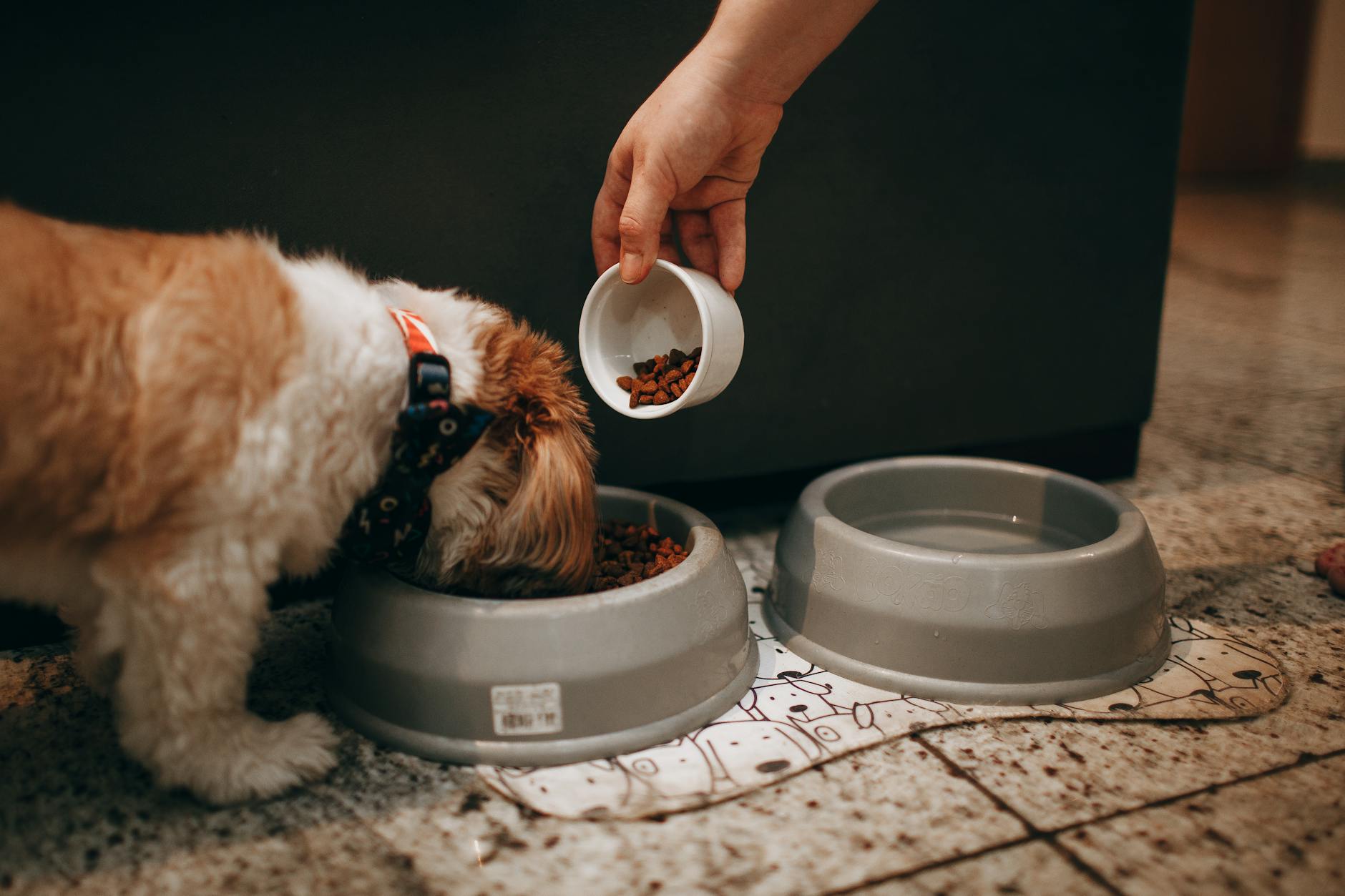 Photo by Helena Lopes on Pexels
Exercise Gets Gentler, Not Shorter
An older dog still needs to move. What changes is the kind of movement. Long, steady walks on soft surfaces tend to be easier on aging joints than hard runs on pavement or repeated leaps after a ball. Short, frequent outings can be better than one long one, and swimming is a low-impact option that many senior dogs enjoy when it is safe and supervised.
Keep an eye on how your dog feels afterward, not only during. If the dog is stiff or sore the next morning, the outing was probably too much. A slightly shorter route is almost always a better bet than pushing for the old routine, and your vet can suggest a plan that fits your dog's joints and heart.
What Different Sizes Mean for Planning Ahead
Because the senior window arrives at different times, it makes sense to plan by size. For a small dog, you have more time, and the main tasks are steady dental care, a healthy weight, and keeping up with annual visits. For a giant breed, the plan moves up the calendar: joint support conversations, a watch on weight, and a twice-yearly checkup schedule can all start in the middle of what feels like adulthood.
Budget planning follows the same logic. If you are thinking about pet insurance or setting aside a savings buffer for veterinary care, the years when costs tend to climb arrive sooner for larger dogs. It is easier to prepare when you know the timeline in advance than to react to a first big bill.
Mixed Breeds and Dogs With Unknown Age
Many dogs are mixed breed or rescued with no clear birth record, which makes any conversion a rough estimate. In those cases, size is the best clue you have. Weight gives you a decent guide to which aging curve fits, and your vet can estimate age from teeth, coat, eyes, and joints, with the understanding that these are only ranges.
Do not worry about getting the number exactly right. The point of the exercise is to put your dog in the right ballpark for care decisions, not to assign a precise birthday. A rescued dog who looks middle aged and weighs seventy pounds should be handled with the same alertness for joint and weight changes whether the true number is six or eight.
A Short Checklist for Your Own Dog
Go through a few steps and you will have a working plan for your dog's stage of life:
- Note your dog's age and its adult weight, and place it in a size category.
- Use an age conversion tool to see its approximate human-equivalent age and life stage.
- Ask your veterinarian when a senior schedule should begin for a dog of this size.
- Track weight and body condition at every visit rather than guessing.
- Write down any change in mobility, appetite, thirst, or behavior and bring it along.
That list is small enough to finish in one evening, and it replaces a vague worry about getting old with a list of concrete things to check.
The Short Version
Dogs do not age at one speed. Size sets the pace, so a giant breed can be a senior while a small dog of the same age is barely middle aged. The old 7-to-1 rule hides all of that, and relying on it can make you late to the checkups, weight control, and joint care that matter most in the later years.
Work out your dog's life stage by size, bring it up with your veterinarian, and make the timeline part of your planning rather than a surprise. If you want a quick starting point, the free dog years calculator by EvvyTools will turn your dog's age and size into a life stage in seconds. For more tools like it, browse the EvvyTools tools directory, read more guides on the EvvyTools blog, or start at the EvvyTools homepage. For general background reading on canine health, the American Kennel Club is another reliable resource.