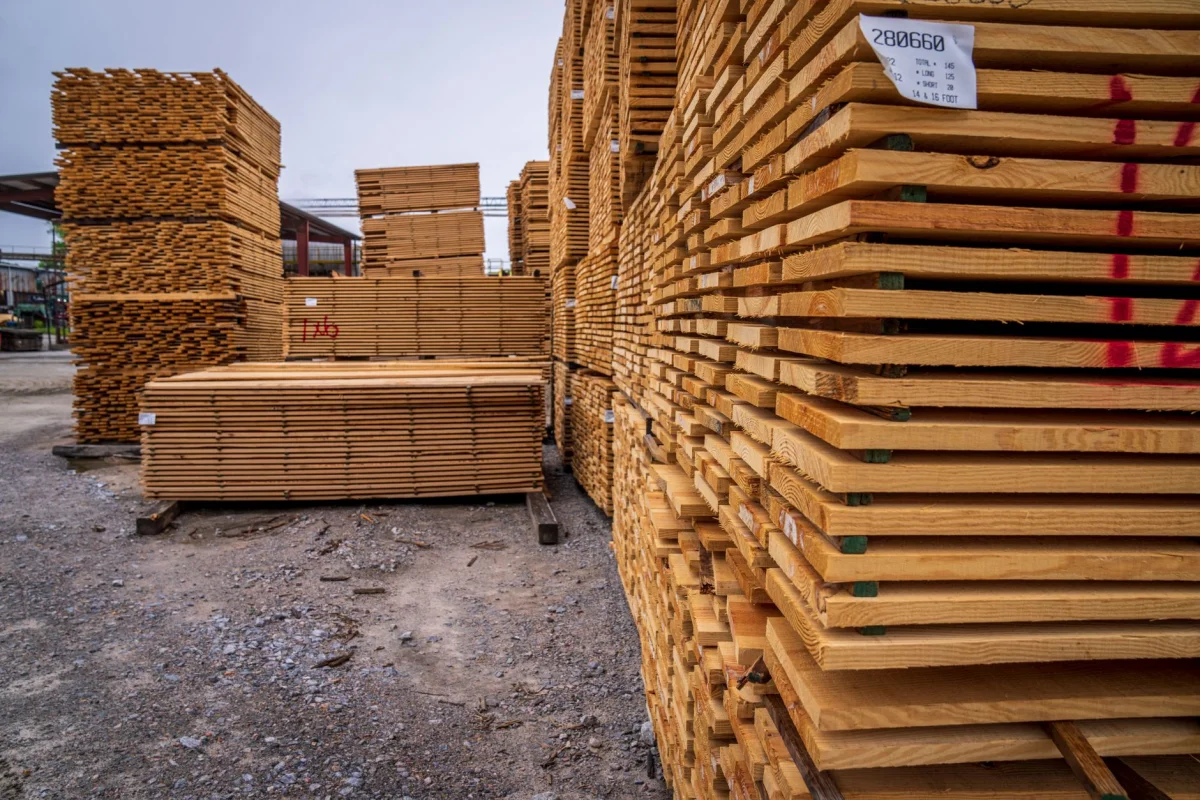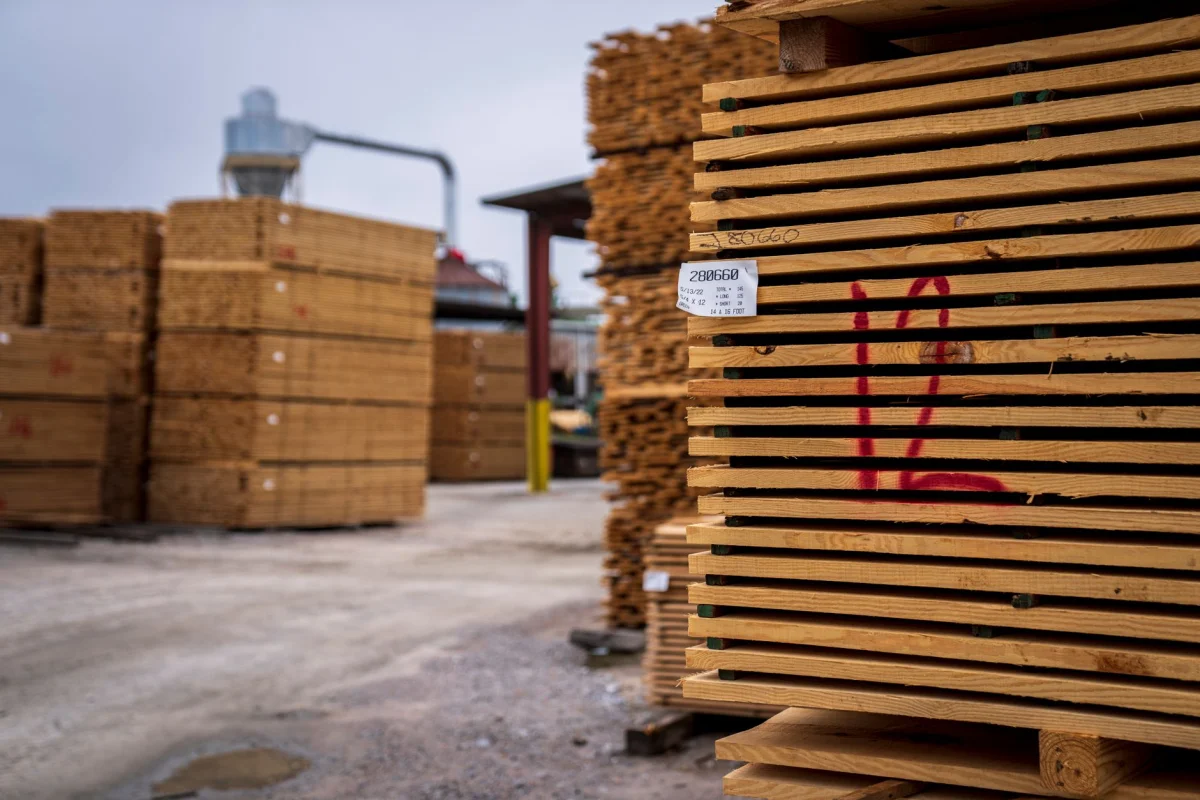
Two boards lean against the rack at the lumber yard. They look almost identical. Same species, same nominal size, similar length. One is $14. The other is $34. The price tag does not tell you why, and the helpful person at the desk is on the phone.
The reason is grade. Lumber grading is the single most useful piece of vocabulary you can pick up before spending money on wood, and it is also the part most home-improvement guides skip. This article walks through what grade actually measures, how the two main grading systems work, what the stamps on softwood boards mean, and how to translate any of that into a real cost-per-board-foot decision for your project.
 Photo by Mark Stebnicki on Pexels
What "grade" actually measures
A lumber grade is a structured rating of how clear the board is, how straight the grain runs, how many knots or defects it carries, and how much usable material a buyer can expect to cut out of it. Higher grades give you more clear, straight, defect-free wood per board. Lower grades give you a board that may need more trimming, more selecting around knots, and more waste before you reach the cuts you actually need.
Grade is not the same as species, and it is not the same as dimensional size. A 1x6 piece of red oak can be top-grade or bottom-of-the-pile depending on what the inspector saw when the board came off the saw. Two boards that look identical to a customer can land two grades apart because of a hidden split, a knot pattern on the back side, or a streak of mineral discoloration.
That spread between grades is where most of the cost variation in lumber comes from. Once you can read it, you stop overpaying for clarity you do not need and you stop under-buying for projects that demand it.
Hardwood grading: the NHLA rules
In the United States, hardwood lumber grades are set by the National Hardwood Lumber Association, which maintains the rulebook most domestic mills and importers follow. The system is based on cuttings, which means it measures how much clear, defect-free material a grader can saw out of one face of a board.
The main tiers, simplified:
- FAS (First and Seconds). The premium tier. Long, mostly clear boards with the bulk of the face usable. The minimum board size and the share that has to be clear are both stricter at this grade. FAS is what high-end furniture, cabinet doors, and visible trim get specified at.
- Selects or F1F. One face has to grade as FAS; the back face is allowed to be a step lower. Useful when only one face will be visible.
- #1 Common. Shorter clear cuts, more knots, smaller minimum sizes. The workhorse grade for cabinet interiors, drawer parts, and furniture pieces that get cut into smaller components anyway.
- #2A Common. Even more defects, smaller clear cuts. Good for paint-grade work, jigs, shop fixtures, and parts where you can rip around knots.
- #3A Common and below. Heavy defects, mostly for utility, pallets, and crating.
Two practical effects fall out of this. First, the higher grade is not always the right grade. If you are building a face frame where every visible part is only six inches long, a stack of #1 Common gives you more usable cuttings per dollar than FAS, because you can plan around the defects. Second, mills price by grade, so the per board foot quote you get is meaningless until you know what tier it is for. A $4.50 per board foot quote on FAS walnut and a $4.50 per board foot quote on #2A walnut are very different transactions.
 Photo by Engin Akyurt on Pexels
Softwood grading: dimensional and appearance grades
Softwood lumber, the framing and trim wood most home projects actually use, runs on a different system. The main framing grades are set by regional rules agencies operating under the American Lumber Standard Committee, which oversees grading authority across the country. The Southern Pine Inspection Bureau, Western Wood Products Association rules, and similar regional groups all certify mills to apply consistent grade stamps.
For dimensional softwood, you will see grades like:
- Select Structural and #1. Higher strength, fewer knots, used where engineered loads matter or where the lumber will be exposed.
- #2 and Standard. The everyday framing grade. Most studs, joists, and rafters in residential construction are #2 or better.
- #3 and Utility. Lower strength values, more defects. Good for non-structural blocking, fence boards, and temporary work.
- Stud. A specific grade optimized for vertical wall studs, with strength values geared to short, in-wall use.
Then there are appearance grades for trim, paneling, and exposed pine boards. Clear and Select grades have very few knots and are sold for finish work. Common grades have more knots and are sold as "knotty pine" paneling or rough-and-ready shelving.
The big mental shift, coming from hardwood: softwood grade affects both strength and appearance. Hardwood grade is almost entirely about appearance and yield. That changes how you should think about substitutions, which the section below picks up on.
Reading the grade stamp
Open the Wikipedia article on lumber and scroll to the dimensional lumber section if you want a visual reference, but the short version is that every piece of certified softwood carries an ink stamp on one face. The stamp packs four or five pieces of information into a small block:
- Mill number. Identifies the mill that cut the board.
- Grading agency. The regional rules group (WWPA, SPIB, NLGA, or similar) certifying that mill.
- Grade. The actual grade tier, such as #2, #1, or Select Structural.
- Species or species group. Often abbreviated, such as SPF for the spruce-pine-fir group or SYP for Southern Yellow Pine.
- Moisture status. KD or KD-HT for kiln-dried (often heat-treated), S-GRN for surfaced green, S-DRY for surfaced dry.
Once you can decode it, the stamp tells you almost everything that matters for pricing in about three seconds. A #2 SPF KD-HT board and a #2 SYP S-GRN board may sit on the same rack at very similar prices, but they will behave differently as the building they go into settles, and they should not be priced as equivalents.
Hardwood does not always carry a stamp. The mill or distributor will instead tag the bundle, and the grade is written on the wrap or the invoice. If you are buying retail and the bundle has been broken open, ask the seller what grade the bundle was tagged at. Reputable yards will know.
 Photo by Quintin Gellar on Pexels
 Photo by Julio Muebles on Pexels
Why this matters for your budget
Here is where the per board foot math actually changes shape. Take a project that needs twenty board feet of finished red oak. If you spec FAS at the going retail price, you might pay roughly $7 to $9 per board foot in many US markets, totaling $140 to $180. If you spec #1 Common at the same yard, you might pay $4 to $5 per board foot, but you will need to buy more raw stock to allow for cutting around defects. A rough rule is to budget 25 to 35 percent extra raw board feet at #1 Common, depending on how short your finished pieces are.
Do the math: 20 board feet finished at FAS is 20 board feet purchased. The same 20 board feet finished at #1 Common might be 26 to 27 board feet purchased. At $4.50 per board foot, that is roughly $117 to $122, still cheaper than FAS, with the tradeoff of more cutting work, more offcuts to manage, and more time at the saw selecting around knots.
That tradeoff is the entire game. The grade choice should match the project, not the budget alone. For furniture you want to look like furniture, FAS or Selects on the visible parts and #1 Common on the hidden parts is a strong default. For a shop bench or paint-grade trim, #2A Common pine or a lower hardwood grade is honest money saved. For framing, the grade is already pinned by the structural call, not the wallet.
This is exactly where running the numbers ahead of time pays off. EvvyTools' free board foot calculator gives you a quick way to translate dimensions and species into both board feet and weight, which matters because lower grades let you buy more raw material without surprising yourself at checkout or in the truck bed on the way home. The tools directory carries the rest of the home and project calculators you might want alongside it.
A few patterns that catch people out
Same grade, two yards, different prices. Grading rules are uniform on paper, but yards differ in how strictly they sort and in what they accept on the way in. A yard that culls aggressively for clarity gives you more usable material per board foot, which is worth a premium. A yard that lets borderline boards into a tier costs less on the tag and more in the cutting room.
Mixed-grade bundles. Some hardwood retailers sell "shorts" or "shop bundles" that combine multiple grades at a blended price. These can be excellent value for small parts work and a poor value for long, clear runs. Always ask what the cuttings rules were and how short the shortest boards run.
Imported hardwood grading. Boards from outside North America may be graded under different rules (European EN grades, for example, or rules specific to the country of origin). The grade name might look familiar but the cuttings yield can be different. When in doubt, ask the supplier to translate to NHLA-equivalent terms.
Moisture and stability. Two boards at the same grade and species can move very differently if one was kiln-dried to 8 percent and the other was air-dried to 12 percent. Grade does not capture moisture beyond the stamped status. Read the softwood and hardwood basics if you want a deeper background on how species and seasoning interact with grading.
Engineered alternatives. For some projects, an engineered product (LVL, glulam, plywood, MDF) replaces a lumber-grade decision with a manufacturer spec. The grading conversation goes away and is replaced by a product data sheet. That is usually a simplification, not a downgrade.
A short checklist before you order
- Pin down the species and what you want each piece to do.
- Pick a grade that matches the visible-versus-hidden split for the project.
- Read the stamp or ask for the bundle tag. Confirm grade, species, and moisture.
- Translate finished board feet into purchased board feet using a defect allowance suitable for the grade.
- Run the total through a board foot calculator before you load the truck, not after.
Grade is one of those vocabulary jumps where the price tag stops looking random within about a week of using it. Two boards at the same price are still two different buys, and now you can tell which one is yours.
For the actual math from dimensions to board feet and dollars, the EvvyTools blog carries the rest of the project-cost walkthroughs in this series.