Most first-time deck builders pick joist spacing the same way they pick paint colors. They see 16 inches on center in a YouTube video, they see 16 inches on center in a Home Depot handout, and they buy enough joists to hit 16 inches on center without ever asking whether that number is right for their boards, their span, or their budget. Then the first time the finished deck flexes underfoot near the grill, they wonder what they missed.
Joist spacing is not a style question. It is a load question, a board-manufacturer question, and a code-compliance question, and the answer changes what you order, how much you spend, and whether the deck feels solid ten years from now. Pick it wrong and you either overbuild by 30 percent or you end up with a bouncy floor that shows every hot summer.
This guide walks through what actually drives the 12, 16, or 24-inch decision, when composite boards force your hand, and how to sanity-check the number your framer or contractor is quoting.
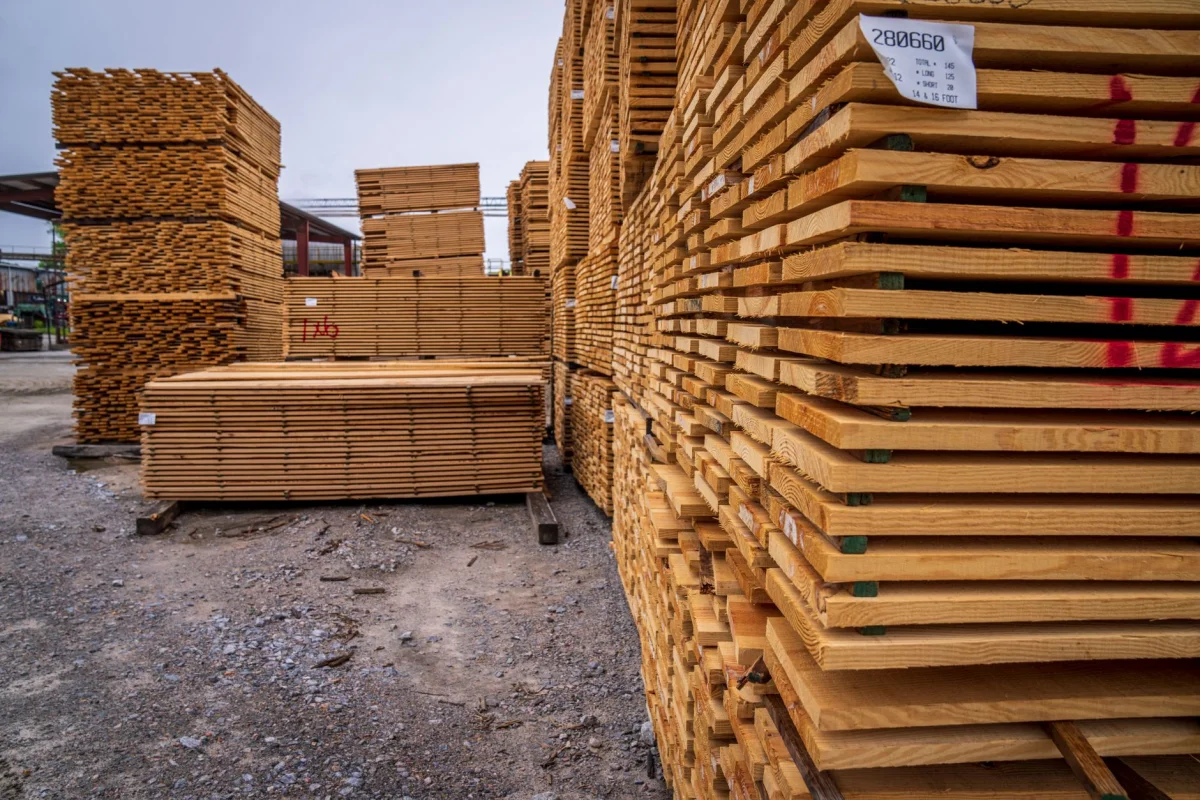
 Photo by Laura Cleffmann on Pexels
What "on center" actually means
Joist spacing is measured from the centerline of one joist to the centerline of the next, not from edge to edge. So 16 inches on center means the centers are 16 inches apart, which puts about 14.5 inches of clear space between joists after you subtract the 1.5-inch thickness of dimensional 2x lumber.
The number matters because your decking boards span that gap. The wider the gap, the more each board has to work to hold up whatever is on top of it - a person, a grill, a full 10-foot patio table. A 5/4-inch pressure-treated pine board that feels rock-solid on 12-inch spacing will visibly deflect on 24-inch spacing under the same weight. The wood is the same. The physics is not.
The three spacings you will see in almost every plan are:
- 12 inches on center - tight, expensive, mostly reserved for special cases
- 16 inches on center - the default residential number, works for most cases
- 24 inches on center - the widest most codes allow for a deck, and only allowed with specific board thicknesses
Everything else is a variation of these three.
What drives the choice
Four things decide which of those numbers is right for your build.
The board material. Wood boards and composite boards have completely different span ratings. A 5/4-inch pressure-treated southern pine board is rated by the Southern Forest Products Association for 24-inch spacing on straight-across installation and 16-inch on 45-degree diagonal patterns. A composite board from most manufacturers is rated for 16-inch straight and 12-inch diagonal - the composite is heavier and more flexible than solid wood, so it needs more support. That is the manufacturer's number, not a suggestion. Ignore it and you void the warranty.
The board pattern. Running boards straight across the joists is the shortest span each board sees. Running them at a 45-degree diagonal - a common look for curb appeal - makes each board effectively 1.41 times longer between joists. That is why the same board that is rated for 24-inch straight is only rated for 16-inch diagonal. Herringbone and picture-frame patterns effectively add more diagonal runs and tighten the spacing further.
The live load. Residential decks are typically designed for a 40 pounds-per-square-foot live load - the code-standard number for people, furniture, and normal use. If you are planning a hot tub, a heavy planter wall, or a full outdoor kitchen with a masonry pizza oven, that number goes up fast and joist spacing goes down along with joist size. This is the point where a plan review by a structural engineer stops being optional.
Your local code. Most residential decks in the United States follow the International Residential Code span tables, but local jurisdictions can and do amend them. Some coastal or high-wind areas require tighter framing. Some snow-belt towns require a heavier live load for snow load, which pushes spacing to 12 inches on center for the same board. Ask your building department what live load they want you to design for before you frame anything.
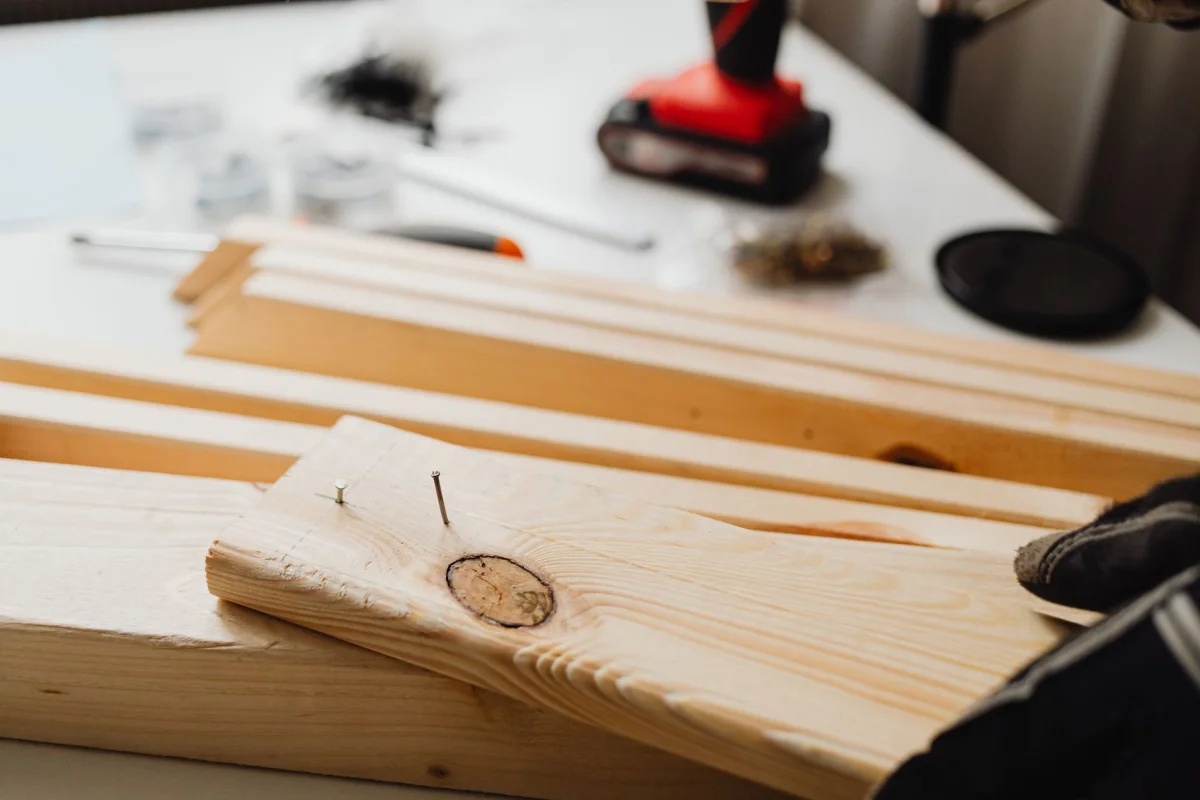
 Photo by Mark Stebnicki on Pexels
The 12-inch case
Twelve inches on center is what you use when the answer to "will this deflect under load" needs to be an obvious no.
The three real-world triggers for 12-inch spacing:
- Composite boards installed at 45 degrees or a herringbone pattern. Most composite manufacturers require it in their installation guide.
- A hot tub, pizza oven, or planter wall over 500 pounds sitting on the deck. The concentrated load spreads out through the joists, but the joists have to be close enough together to share it.
- A local code amendment that requires it - some cold-climate towns and some coastal high-wind zones will not approve 16-inch spacing for certain applications.
The cost hit is real. Going from 16-inch to 12-inch spacing does not just add 33 percent more joists - it also adds joist hangers, more nails or structural screws, more labor to hang and space them, and a longer inspection punch list. On a 12x16 deck you are looking at roughly 8 extra joists, which for pressure-treated 2x8 material at current prices runs somewhere in the low-to-mid three figures just in lumber, before hangers and fasteners.
Do not pick 12-inch out of caution when 16-inch is code-legal. You are paying real money to solve a problem you do not have.
The 16-inch case
Sixteen inches on center is the default for a reason. It works with almost every 5/4-inch pressure-treated wood board on the straight-across pattern, it works with most composite boards on the straight-across pattern, and it is what most contractors quote unless you tell them otherwise.
Cases where 16-inch is the right answer:
- Straight-across installation of standard 5/4-inch pressure-treated decking or 1-inch cedar decking
- Diagonal installation of 2x6 solid decking
- Straight-across installation of most 1-inch composite boards under normal residential live loads
- A deck under 100 square feet where the joist-count savings from 24-inch spacing are not enough to justify the compromise on stiffness
The tradeoff at 16-inch is that you will feel the deck flex more than a 12-inch deck under a running kid or a big grill being rolled across the boards. That flex is inside the code envelope and inside the manufacturer's warranty. It is not a defect. It is just what a deck feels like at that spacing.
The 24-inch case
Twenty-four inches on center is legal in a narrower band of situations than most guides let on.
You can use 24-inch spacing when:
- You are running 5/4-inch pressure-treated southern pine or Douglas fir straight across the joists
- The live load is 40 pounds per square foot or less
- The board manufacturer's install sheet explicitly permits 24-inch spacing (some brands do, some do not)
- Your local building department has not amended the code to require tighter spacing
The savings are real. A 12x16 deck at 24-inch spacing needs roughly 8 fewer joists than the same deck at 16-inch spacing. That is a meaningful drop in lumber cost, joist hangers, and framing labor.
The downside is that the finished deck will feel slightly more flexible underfoot. Not unsafe. Not out of code. Just noticeably different from a 16-inch deck. Some homeowners hate it. If you are the kind of person who notices when a car sags a millimeter when someone leans on the hood, do not pick 24-inch.
"The framing spacing decision is where 60 percent of the material cost is locked in on a deck build, and it is also where most people stop paying attention. Pick it before you spec the boards, not after." - Dennis Traina, founder of 137Foundry
How to sanity-check a contractor's quote
If a contractor is quoting your deck, the spacing number should be in the estimate somewhere. If it is not, ask. Then run it through this checklist:
- Does the board manufacturer's install sheet permit that spacing for the board pattern in the plan? Look up the exact product and the exact pattern.
- Is the joist size right for the span? A 16-foot deck at 16-inch spacing typically needs 2x10 joists, not 2x8. The American Wood Council span calculator is the reference contractors use.
- Does the quote account for local code amendments? A quote that ignores a local snow-load requirement will show up as a failed inspection later.
- Does the joist size, spacing, and board choice add up to a material cost that matches the estimate? If the estimator quoted 16-inch spacing but the material list only has enough joists for 24-inch, someone made a mistake.
If you want to check the math yourself before you sign, the EvvyTools Decking Calculator breaks out joists, beams, posts, footings, fasteners, stairs, and railing separately - which lets you see whether the contractor's line items line up with the spacing they are quoting. If a quote says 16-inch spacing but the joist count matches 24-inch, that is worth a phone call.
 Photo by Pilan Filmes on Pexels
The composite question
Composite decking is not the same product it was a decade ago. Modern capped composite from major brands is denser, less flexible, and heavier than early composite - which is why the spacing rules changed.
The current rule for most residential composite:
- Straight-across installation: 16-inch on center
- Diagonal or picture-frame installation: 12-inch on center
- Stair treads: 12-inch on center regardless of pattern
- Some heavy commercial-grade composite lines: 12-inch on center for everything
The manufacturer's install sheet is the authoritative document. Every major composite brand publishes one on their website; a search for "[brand name] installation guide" turns it up. Do not go by the box, by the salesperson, or by an online forum. The sheet is what an inspector will hold you to and what the warranty is written against.
The framing cost delta between 16-inch and 12-inch spacing on a composite build is often the argument for picking straight-across over diagonal installation. Diagonal looks great on Instagram; it also adds real four-figure dollars to a moderately sized deck. Know what you are paying for.
What this means for your material list
Once you pick a spacing, everything else on the material list snaps into place: how many joists, how many hangers, how many fasteners, how much beam capacity you need to support the joists, and how big the footings need to be to support the beam.
That cascade is why picking spacing after you order boards is a bad idea. Order the boards, then pick spacing that matches the boards, and you may find your local yard is out of the exact joist length you need in the quantity you need. Pick spacing first, then let it drive the board choice and the material list, and the whole thing quotes cleanly.
For a rough starting point, a straightforward 12x16 rectangular deck at 16-inch joist spacing with pressure-treated framing and 5/4 pressure-treated decking on 4x4 posts is a build most experienced DIYers can finish in a long weekend if the materials are delivered ready. Push the spacing to 12 inches, add composite boards, and it becomes a longer job with a bigger material list and a heavier structure that needs bigger footings.
Before you frame anything
Three questions to answer before the first joist hanger goes on:
- What board am I using, in what pattern? Look up the manufacturer's install sheet.
- What live load does my local code require? Call the building department, do not guess.
- What joist spacing does the intersection of those two allow? Pick the widest legal spacing that meets the manufacturer's install sheet and that you can live with underfoot.
Answer those three in order and the rest of the framing decisions - joist size, beam size, footing size - follow from a span table without any surprises.
For the material list itself, running the numbers through the EvvyTools Decking Calculator will surface the beam and footing consequences of your spacing pick before you get to the lumber yard. And browsing the EvvyTools tools directory will surface related calculators for stair rise-and-run, railing spacing, and fastener count if the deck design has any of those elements. More step-by-step build planning writeups live on the EvvyTools blog.
Pick the spacing before the boards. Order the framing to match. Frame to the spacing on the plan. That is the whole game.