The "eight glasses a day" advice has been repeated so often that most people accept it without question. The problem is that it is not a medical recommendation. It is a rough approximation that originated from a 1945 U.S. Food and Nutrition Board guideline and has since been widely misquoted. The original guideline noted that most of that fluid comes from food, a detail that got lost somewhere over the following eight decades.
The actual amount of water your body needs each day depends on your body weight, your activity level, the climate you live in, and several other individual factors. Two people following the same "eight glasses" rule can end up meaningfully over- or under-hydrated relative to their real needs, with consequences for energy, digestion, cognitive performance, and kidney function over time.
This guide explains how to calculate a personalized daily water target, what the research actually says about hydration, and how to structure your day to hit your intake consistently.
Why Eight Glasses Is the Wrong Starting Point
Eight glasses translates to roughly 64 ounces or about 1.9 liters. For a 120-pound sedentary person in a cool climate, that might be appropriate. For a 200-pound person who exercises daily in a warm climate, it falls far short.
The reason body weight is the more useful starting variable is that it correlates directly with the volume of fluid your body needs to sustain basic cellular function, regulate temperature, transport nutrients, and flush waste products through the kidneys. A larger body contains more metabolically active tissue, runs more biochemical reactions, and produces more waste products that need to be cleared in urine. The water requirement scales accordingly.
The National Academies of Sciences, Engineering, and Medicine publishes general adequate intake values for total water - 3.7 liters for adult males and 2.7 liters for adult females - but these figures include water from all food and beverages, not just drinking water. They are also averages across large population samples, not prescriptions for individuals.
The Weight-Based Formula
The most widely used clinical starting point for estimating personalized water needs is 0.5 ounces per pound of body weight per day, sometimes expressed as 30 to 35 milliliters per kilogram. This formula appears in dietary guidelines from sports medicine and clinical nutrition contexts and provides a more individualized baseline than a flat eight-glass rule.
For a 150-pound adult, that works out to 75 ounces, about 9.4 eight-ounce glasses, or roughly 2.2 liters. For a 180-pound adult, it is 90 ounces, or about 11 glasses. For someone who weighs 120 pounds, the formula produces 60 ounces, which is actually close to the eight-glass approximation but arrived at with an explicit reason rather than a rule of thumb.
The formula gives you a baseline for a sedentary day with no extreme temperature exposure. It is the minimum floor, not the ceiling for active people.
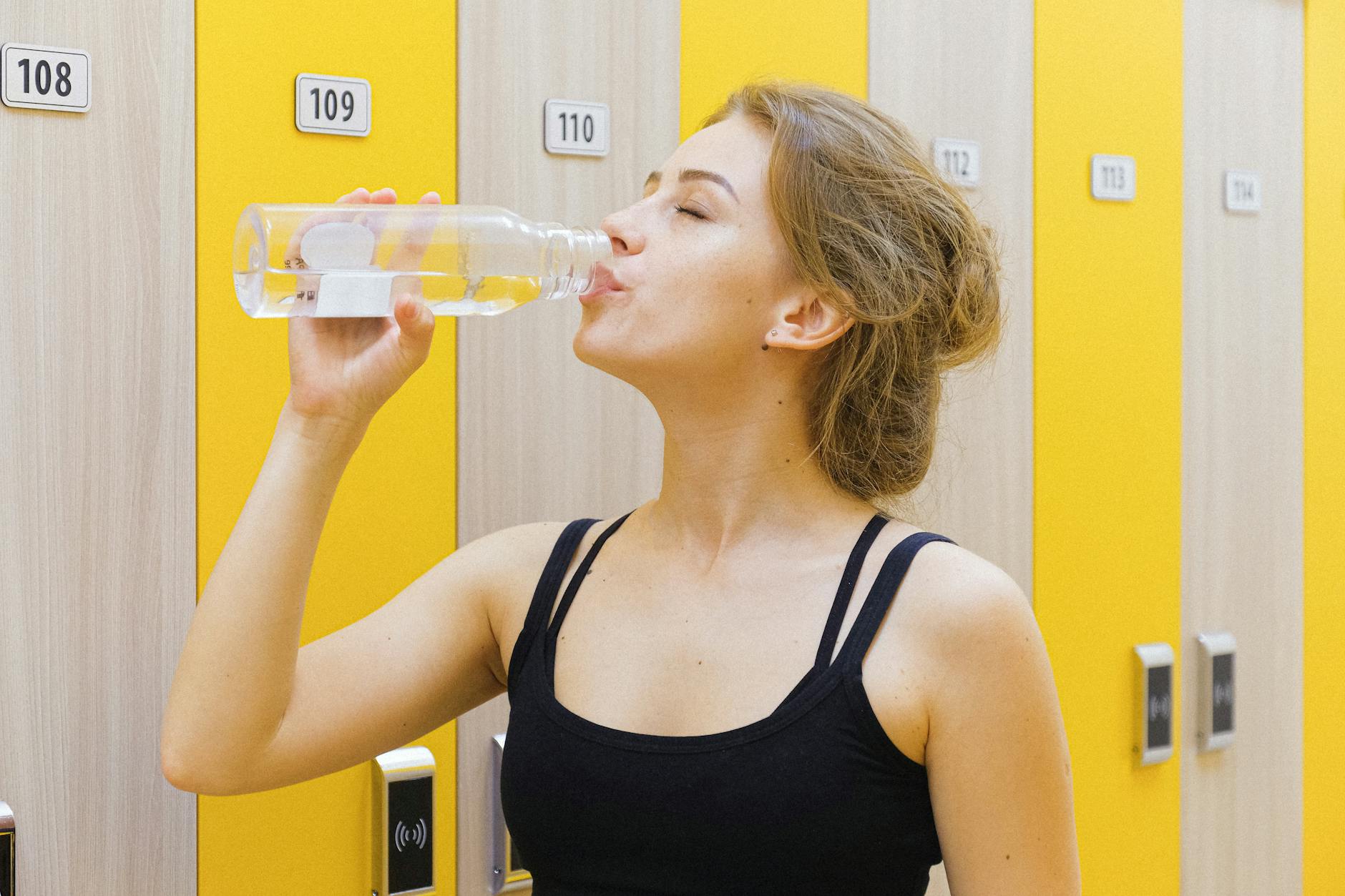 Photo by Anna Shvets on Pexels
How Activity Level Changes the Calculation
Physical activity raises water requirements substantially through two mechanisms: you lose water through sweat, and increased metabolic activity generates more heat that your body must dissipate through evaporative cooling.
The American Council on Exercise guidelines recommend drinking 17 to 20 ounces of water about two hours before exercise, 7 to 10 ounces every 10 to 20 minutes during exercise, and 8 ounces within 30 minutes of finishing. That adds up to 32 to 60 additional ounces (1 to 1.8 liters) on an active day depending on workout duration and intensity.
A practical framework for incorporating activity into your daily target:
- Light activity (30 minutes or less, low intensity): Add 12 to 16 ounces to your baseline
- Moderate activity (30 to 60 minutes, moderate intensity): Add 20 to 32 ounces
- Heavy activity (60+ minutes or high intensity): Add 40 to 48 ounces
- Outdoor heat exposure or highly humid conditions: Add an additional 16 to 32 ounces regardless of exercise
The Water Intake Calculator handles this automatically - enter your weight, activity level, and climate conditions, and it calculates your adjusted daily target and generates an hourly drinking schedule tailored to those inputs.
Climate and Environment as Factors
Ambient temperature and humidity significantly affect sweat rate and respiratory water loss. In hot weather, your sweat rate can reach one to two liters per hour during moderate activity. In cold weather, both sweat rate and respiratory moisture loss decrease, reducing total daily fluid requirements.
Indoor environments with low humidity. Office buildings with air conditioning and dry winter climates accelerate moisture loss through respiration and skin evaporation even without exercise. If you work in a climate-controlled building or live in an arid region, your passive water loss is higher than in a temperate, humid environment, and your daily intake should account for that.
Altitude is another underappreciated factor. At elevations above 8,000 feet, increased respiration rate and lower humidity accelerate moisture loss, and fluid needs can increase by as much as a liter per day above sea level levels. Travelers to high-altitude destinations often experience dehydration symptoms they incorrectly attribute to altitude sickness.
What Dehydration Actually Looks Like
The common marker people cite is urine color: pale yellow to straw indicates adequate hydration, darker yellow suggests mild dehydration, amber indicates significant dehydration. This is a reasonable and practical guide for routine self-monitoring.
But mild dehydration, defined as fluid loss equal to one to two percent of body weight, can impair physical and cognitive performance before urine color changes noticeably. A 150-pound person loses more than two pounds of water weight before reaching the two-percent threshold. At that level, research published in journals including the Journal of the American College of Nutrition has documented measurable reductions in concentration, short-term memory, and mood, particularly in women.
Thirst is also an unreliable early indicator. By the time the thirst mechanism activates, you are already mildly dehydrated. Relying on thirst rather than intake tracking works adequately for most people under normal conditions, but breaks down during exercise, in heat, or with aging - thirst sensitivity decreases as people get older.
 Photo by Maria Belen Levy on Pexels
Building a Hydration Schedule
Spreading water intake throughout the day is more effective than catching up with large volumes at one time. The kidneys can only process about 800 to 1,000 milliliters per hour - drinking more than that at once overwhelms the kidneys' reabsorption capacity and the excess is excreted as very dilute urine, which is wasteful and can in extreme cases cause hyponatremia, a dangerous dilution of blood sodium.
A practical hourly schedule for someone targeting 90 ounces per day:
- Wake up: 16 ounces (after overnight loss)
- Morning (every 90 minutes): 10 to 12 ounces, three intervals
- Lunch: 12 ounces with meal
- Afternoon (every 90 minutes): 10 to 12 ounces, two intervals
- Dinner: 12 ounces with meal
- Early evening: 8 ounces
- Stop 90 minutes before bed to minimize disrupted sleep
This distributes intake fairly evenly across waking hours without requiring memorization of exact amounts at each interval. The Water Intake Calculator generates a personalized hourly schedule based on your wake time, sleep time, and total daily target, removing the need to work out the math manually.
Foods as a Meaningful Source of Hydration
The 1945 guideline that originally produced the "eight glasses" figure noted that most daily water intake comes from food, not beverages, and this remains true for most adults with a vegetable-rich diet. Fruits and vegetables by weight are 80 to 95 percent water, and including substantial portions of them in your diet contributes meaningfully to your daily fluid balance.
Cucumber, lettuce, celery, tomatoes, strawberries, and watermelon are among the highest-water foods. A 200-gram serving of cucumber delivers about 190 milliliters of water, roughly equivalent to a six-ounce glass. A diet heavy in whole foods genuinely reduces the volume of drinking water needed relative to a heavily processed diet.
Coffee and tea count toward your daily fluid intake, despite the persistent myth that caffeine negates their hydrating effect. Caffeine has a mild diuretic effect at very high doses, but at typical beverage concentrations the net fluid contribution is positive. The Mayo Clinic explicitly notes that caffeinated drinks count toward daily fluid intake for most people.
 Photo by İclâl Ağlamaz on Pexels
Practical Habits That Make Hitting Your Target Easier
Several behavioral strategies consistently improve daily hydration without requiring conscious tracking at every interval:
Anchor water to existing habits. Drinking a glass when you wake up, with each meal, and when you take any regular medication adds four to five glasses to your day with no additional decision-making. These anchor points alone can account for 40 to 50 percent of a typical daily target.
Keep water visible and accessible. Research on behavioral nudges consistently shows that visibility is a stronger predictor of eating and drinking behavior than intention. A water bottle on the desk gets used. A pitcher out of sight does not.
Use a marked bottle. Bottles with hourly volume markers provide passive progress tracking without requiring you to count individual glasses. A 32-ounce bottle that you refill twice easily covers 64 ounces before you consciously count any glasses.
Set check-in reminders. Not every 20 minutes; use two or three fixed points in the morning, afternoon, and early evening. The goal is not to drink on command but to notice whether you are significantly behind and adjust.
When to Recalculate
Your daily water target is not a static number. It changes with body weight, season, activity patterns, and life circumstances. Athletes who lose or gain significant muscle mass, people who move to different climates, and anyone whose activity level changes substantially should recalculate their baseline.
Illness adds acute water demands. Fever increases fluid requirements by roughly 10 to 15 percent for each degree of temperature elevation above normal, and gastrointestinal illness accelerates losses through diarrhea and vomiting. Pregnancy increases adequate intake levels by about 300 milliliters per day, and breastfeeding adds roughly 700 milliliters per day above baseline.
The Dietary Reference Intakes for Water published by the National Academies provide detailed breakdowns of how requirements change across life stages, from infancy through older adulthood, for reference.
The Simplest Version
If you want a single, concrete number to start with: take your body weight in pounds and divide by two. That is your daily target in ounces for a sedentary day. Add 20 to 40 ounces if you exercise. That range covers the realistic variation for most adults in most conditions.
The Water Intake Calculator produces this calculation automatically while also accounting for activity level, climate, and your personal schedule, and generates the hourly breakdown so you can see exactly when to drink throughout the day rather than trying to distribute 90 ounces informally.
Hydration is one of the few health variables where the difference between a generic rule and a personalized calculation is large enough to matter practically. Your weight and activity level determine your target. Start there, track for a week, and adjust based on how you feel and your urine color. Most people find the right range within two weeks of intentional attention, and the habit becomes automatic from there.
For reference, the USDA's dietary guidelines on hydration and the Academy of Nutrition and Dietetics' position on fluid needs both recommend individualized fluid targets over population-level rules, which aligns directly with the weight-based approach this guide and the calculator use.