


A baseball hit at an angle, a water stream from a garden hose, a ball rolling off a table and falling to the floor -- these are all examples of projectile motion. The physics behind them is the same, and the calculations that describe them are among the most useful in basic mechanics.
Understanding how to calculate trajectory, range, maximum height, and flight time isn't just useful for physics class. It comes up in sports science, ballistics, engineering design, and anywhere you need to predict how an object will move through the air under gravity. The equations aren't complicated once you understand what each variable represents.
What Projectile Motion Actually Is
A projectile is any object that is launched or thrown and then moves under the influence of gravity alone, with no engine or ongoing force propelling it. The defining feature is that once launched, only gravity acts on it (ignoring air resistance, which we'll address later).
The key insight that makes projectile motion tractable is that horizontal and vertical motion are independent of each other. Horizontal velocity stays constant throughout the flight because no horizontal force acts on the projectile once launched. Vertical velocity changes continuously because gravity pulls the object downward at a constant rate of 9.8 meters per second squared (9.81 m/s^2 to be more precise, though 9.8 is standard for most calculations).
This independence is why a bullet fired horizontally and a bullet dropped from the same height at the same instant hit the ground at the same time. Horizontal motion has no effect on how fast gravity pulls something down. This counterintuitive result is one of the most famous demonstrations in introductory physics.
 Photo by the iop on Pexels
Projectile motion is a specific case of two-dimensional kinematics. The horizontal and vertical components are solved separately using the basic kinematic equations, then combined to describe the full trajectory path.
The Core Equations
For a projectile launched at an initial speed v0 and angle theta above the horizontal:
Horizontal velocity (constant throughout flight): vx = v0 * cos(theta)
Vertical velocity (changes due to gravity): vy = v0 * sin(theta) - g * t
where g is the gravitational acceleration (9.8 m/s^2 on Earth) and t is time elapsed since launch.
Position at any time t: x = v0 * cos(theta) * t y = v0 * sin(theta) * t - (1/2) * g * t^2
These four equations describe the complete trajectory. From them, you can derive the most useful calculated outputs: total flight time, maximum height, and horizontal range.
Time of flight (when the projectile returns to launch height): T = (2 * v0 * sin(theta)) / g
Maximum height: H = (v0^2 * sin^2(theta)) / (2 * g)
Horizontal range: R = (v0^2 * sin(2 * theta)) / g
The range equation has an elegant property: it's maximized when theta equals 45 degrees, since sin(90) equals 1. A 45-degree launch angle produces the maximum range for any given initial speed. Angles above or below 45 degrees produce shorter ranges, and complementary angles (for example, 30 and 60 degrees) produce identical ranges.
A Worked Example
A soccer player kicks a ball at 20 meters per second at an angle of 35 degrees. How far does it travel, and how high does it go?
Step 1: Calculate horizontal and vertical components of initial velocity. vx = 20 * cos(35) = 20 * 0.819 = 16.38 m/s vy = 20 * sin(35) = 20 * 0.574 = 11.47 m/s
Step 2: Calculate time of flight. T = (2 * 11.47) / 9.8 = 22.94 / 9.8 = 2.34 seconds
Step 3: Calculate horizontal range. R = 16.38 * 2.34 = 38.3 meters
Step 4: Calculate maximum height. H = (11.47^2) / (2 * 9.8) = 131.56 / 19.6 = 6.71 meters
The ball travels about 38 meters and reaches a maximum height of 6.7 meters. This is consistent with what a moderately powerful kick looks like in practice, which is a good sanity check on the calculation.
 Photo by Artem Podrez on Pexels
The free projectile motion calculator by EvvyTools handles this calculation automatically and includes an animation of the trajectory. You enter initial speed, launch angle, and optionally the launch height above the ground, and it outputs all the key values plus a visual arc. This is particularly useful when you need to compare multiple launch angles quickly, or when you want to visualize how changing the angle affects the trajectory shape.
Gravity Varies by Planet
A feature of the EvvyTools calculator that is worth calling out specifically is multi-planet gravity support. Gravity is not the same everywhere. On Mars, the gravitational acceleration is 3.72 m/s^2, compared to 9.81 on Earth. On the Moon, it's 1.62 m/s^2.
These differences produce dramatically different trajectories for the same launch parameters. The famous video footage of astronauts on the Moon swinging golf clubs shows balls traveling distances that would be impossible on Earth. With lunar gravity of 1.62 m/s^2, the same kick that sends a soccer ball 38 meters on Earth would send it about 233 meters on the Moon.
Physics students and space exploration enthusiasts find these comparisons genuinely interesting, but they also have practical educational value. Comparing Earth and Mars trajectories side by side makes the role of gravitational acceleration in the equations concrete and intuitive in a way that classroom examples often don't. Khan Academy covers the foundational kinematics behind these calculations in detail, and the multi-planet feature extends that into an area that isn't always covered in introductory courses.
Air Resistance: The Idealized Assumption
The equations above assume no air resistance. In the real world, air resistance affects all projectiles, sometimes negligibly and sometimes significantly.
For dense, compact objects like cannonballs or metal shot puts, air resistance is small relative to gravitational effects and the ideal equations produce good approximations. For light objects with high drag, like shuttlecocks or table tennis balls, air resistance substantially reduces range and alters the trajectory shape.
The ideal projectile model remains the standard for physics education and as a first-pass approximation because it produces clean, exact solutions. Air resistance introduces differential equations that require numerical methods to solve, which is beyond the scope of most introductory physics courses and many engineering estimation tasks. The National Institute of Standards and Technology maintains reference data for physical constants including gravitational acceleration values used in precise calculations.
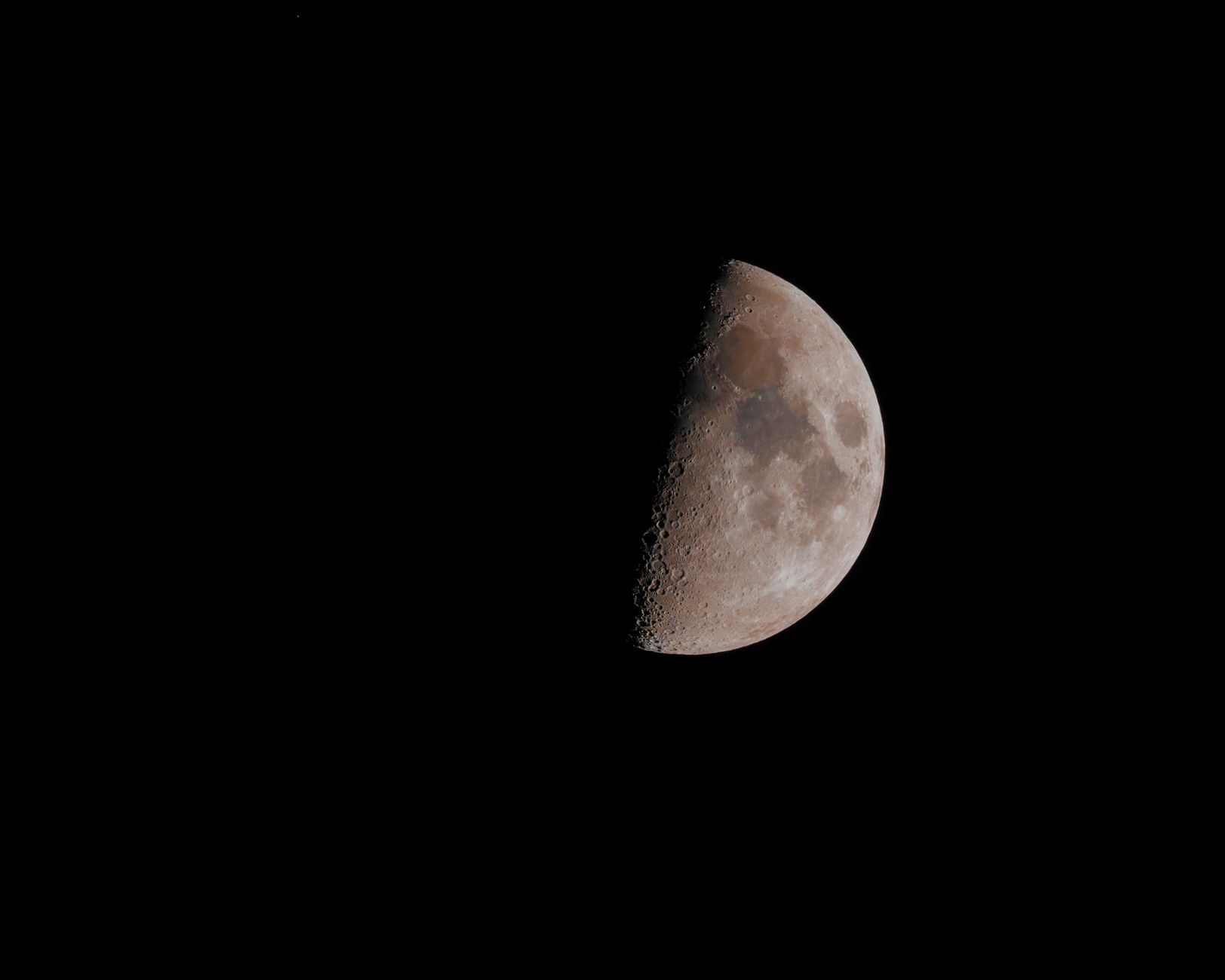 Photo by Frank Cone on Pexels
For most educational and practical estimation purposes, the ideal model is sufficient. When air resistance matters, the equations of motion with drag terms replace the simple constant-gravity equations, and analytical solutions typically aren't available.
Launch Height Variation
The range formula R = (v0^2 * sin(2 * theta)) / g applies when the projectile is launched and lands at the same height. When the launch height differs from the landing height, the calculation is more complex.
If you launch from a cliff or elevated platform, the projectile spends more time in the air before reaching the lower landing point, which increases horizontal range. The time of flight equation changes to account for the height difference, and the maximum-range angle shifts below 45 degrees when launching from elevation.
The full equation for time of flight from an elevated launch point is derived from the vertical position equation: 0 = h + v0sin(theta)t - (1/2)gt^2
where h is the launch height above the landing point. Solving this quadratic for t gives the total flight time, from which range follows immediately as vx * t.
The EvvyTools projectile motion calculator accepts a launch height parameter for exactly this case. More tools for math and science problems are available in the EvvyTools tools directory, and additional guides covering mathematical concepts are on the EvvyTools blog.
Practical Applications Beyond Physics Class
Projectile motion calculations show up in more applied contexts than most people realize. Sports scientists use them to analyze kicking, throwing, and hitting mechanics. Civil engineers use them to model water jets in irrigation and firefighting. Video game developers use projectile physics engines based on these equations to simulate ballistics. Robotics engineers calculate trajectories for ball-throwing robots and similar mechanisms.
The underlying math is the same in all of these applications. What changes is the precision required, the handling of air resistance, and whether gravity is uniform across the scale of the problem. For most everyday applications, the clean equations described here are sufficient and produce results that are accurate enough to be useful.
Understanding the structure of the calculation, rather than just plugging numbers into a formula, makes it easier to sanity-check results and catch errors. If a 45-degree launch gives less range than a 40-degree launch at the same speed, something is wrong with the calculation. The maximum-range at 45 degrees result is a useful built-in check.
Beyond those direct applications, projectile motion analysis shows up in forensic reconstruction and accident investigation. Investigators use ballistic trajectory analysis to determine the origin point of a projectile, the height from which an object fell, and vehicle speeds from debris patterns. The same equations that describe a soccer ball also describe a bullet or a falling object, scaled to different initial velocities and drag profiles.
Animation and simulation software uses physics-based projectile models to make movement look natural. A poorly implemented projectile arc is visually obvious to anyone who has thrown a ball. Game developers and animators use the actual kinematic equations rather than approximations precisely because human visual systems are good at detecting incorrect trajectories. The math behind a thrown grenade in a video game and a thrown baseball on a real field is the same. What differs is whether air resistance and spin effects are included.
For anyone working through introductory physics or reviewing the material for a standardized test, the EvvyTools projectile motion calculator is useful as a verification tool: work through the calculation by hand, then check against the calculator's output. Discrepancies usually point to unit errors (mixing meters and feet) or trigonometry errors (using sine where cosine is needed or vice versa). Both are common and both are easy to catch with a reference calculation alongside.