

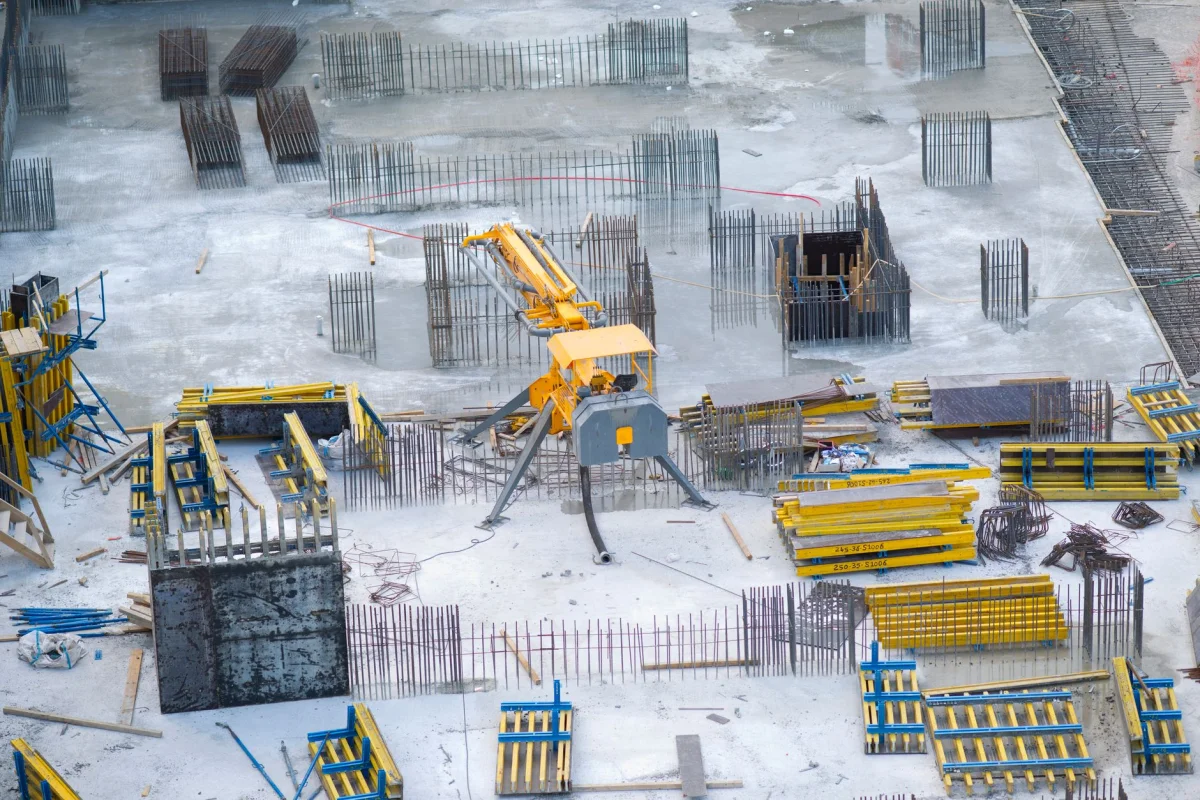
Concrete is sold by the cubic yard, and cubic yards don't forgive rounding errors. Order too little and the truck driver watches you scramble to mix emergency bags while the first load starts to set. Order too much and you're paying a "short load" surcharge for a partial extra yard, or staring at a driveway with a gray puddle of leftover mix nobody wanted. Both mistakes come from the same root cause: skipping the actual volume math and eyeballing it instead.
The good news is that concrete volume is one of the more forgiving calculations in construction, as long as you do it in the right order. Measure the shape, convert to cubic feet, convert to cubic yards, then add a waste factor before you call anyone. Skip a step and the number you hand the supplier is wrong before the truck even leaves the plant.
The Formula Underneath Every Pour
Every concrete volume calculation reduces to the same shape: length times width times depth, divided by 27 to convert cubic feet into cubic yards (a cubic yard is 27 cubic feet, since a yard is 3 feet on each side).
For a slab: measure length and width in feet, and depth in feet (a 4-inch slab is 0.333 feet deep). Multiply the three numbers together for cubic feet, then divide by 27.
A 10-by-10-foot patio slab at 4 inches deep: 10 x 10 x 0.333 = 33.3 cubic feet, divided by 27 = 1.23 cubic yards.
That's the entire calculation for a rectangular pour. Footings, columns, and steps use the same core formula, just with different shapes feeding the length-width-depth inputs, which is the part that trips people up.
 Photo by Fausto Hernández on Pexels
Slabs, Footings, and Steps Are Not the Same Shape
A slab is a simple rectangular prism, which is why the formula above works directly. Footings and steps are not, and treating them like slabs is the single most common concrete overorder or underorder mistake.
Footings are usually long and narrow: a continuous strip under a wall, or a set of isolated square pads under deck posts. For a strip footing, measure the trench length, width, and depth the same way as a slab, but remember the width is often just 12 to 24 inches, so small measurement errors move the percentage a lot more than they would on a wide slab. For isolated post footings, each one is its own small rectangular or cylindrical volume, and you calculate and sum them individually rather than trying to average one number across the whole project.
Steps are stacked rectangular prisms, one per riser, and each step is shallower in depth than the one below it once you account for the tread going up. The cleanest way to estimate steps is to calculate each step as its own slab (tread width x tread depth x riser height, in cubic feet) and sum the steps together, rather than trying to find one formula for the whole staircase at once.
Mixing up these shapes is where the math actually goes wrong, not the length-width-depth formula itself. Get the shape breakdown right and the arithmetic is straightforward.
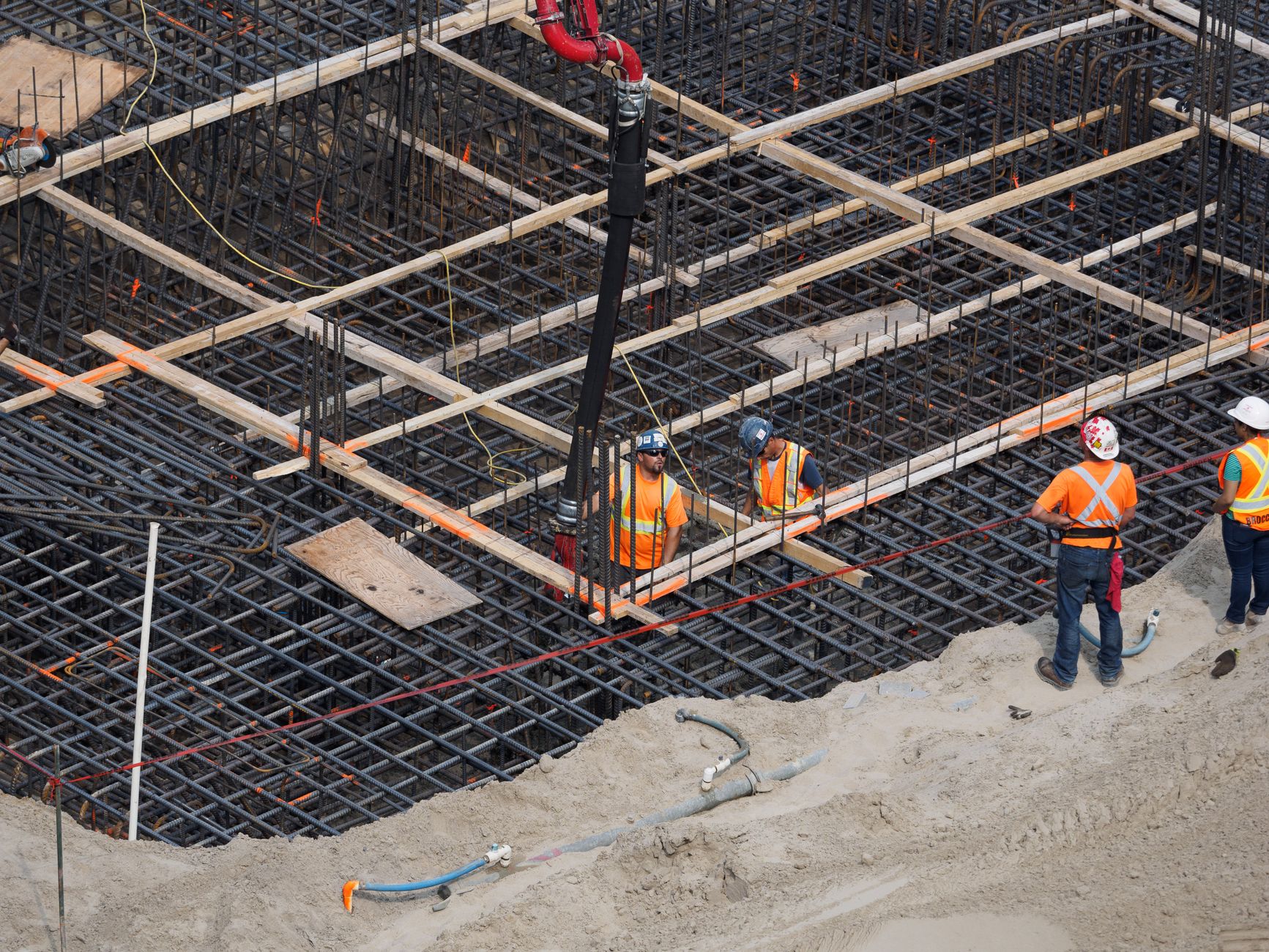 Photo by IslandHopper X on Pexels
Structural footings and load-bearing slabs usually call for rebar or wire mesh reinforcement, which doesn't change your volume math but does change your depth measurement. Reinforcement sits inside the pour, not on top of it, so your depth figure is still measured from the bottom of the excavation or form to the finished surface, with the steel simply embedded partway through that depth. Skipping reinforcement on anything load-bearing is a structural decision, not a cost-saving one, so check local code before deciding a footing doesn't need it.
Converting Cubic Yards to Bags or a Truck Order
Once you know your total cubic yards, you have two purchasing paths: bagged pre-mix or a ready-mix truck.
Bagged concrete is sold by the bag, and coverage depends on bag size. An 80-pound bag yields roughly 0.6 cubic feet of mixed concrete; a 60-pound bag yields about 0.45 cubic feet. To find bag count: convert your cubic yards back to cubic feet (multiply by 27), then divide by the per-bag yield. A 1.23 cubic yard pour is about 33 cubic feet, which needs roughly 55 bags at 80 pounds each.
 Photo by Sergei Skrynnik on Pexels
Ready-mix trucks are sold in whole or partial cubic yards, with most suppliers requiring a minimum order (commonly 1 cubic yard, sometimes higher) and charging a "short load" fee for small orders below a threshold, often around 3 to 5 cubic yards depending on the supplier and region. Below roughly 1 to 1.5 cubic yards, bagged concrete is usually cheaper once you factor in the short-load fee. Above that, a truck typically wins on both cost per yard and labor, since mixing 55 bags by hand is a full day of work a truck delivers in minutes.
Always Add a Waste Factor
Textbook volume math assumes a perfectly formed, perfectly level pour with zero spillage. Real job sites don't work that way. Forms bow slightly under wet concrete's weight, subgrade isn't perfectly flat, and some material is lost to spillage, over-excavation, and the last bit that never quite scrapes clean out of the mixer or chute.
Standard practice is to add 5 to 10 percent to your calculated volume before ordering. Simple slabs on well-prepared, flat subgrade can use the lower end. Footings dug by hand, irregular shapes, or a crew doing their first pour should budget the higher end. Skipping the waste factor is the single most common reason people run short mid-pour and have to place a rushed emergency order at a premium price.
Reading a Cost Estimate Correctly
Concrete pricing varies by region, but a rough national range for ready-mix is $125 to $175 per cubic yard delivered, with significant variation based on local supply, delivery distance, and mix specification (higher-strength mixes for structural work cost more than standard slab mixes). Add labor, forming materials, and finishing tools if you're not already equipped, and a small DIY slab pour can run noticeably higher in total cost than the raw concrete line item suggests.
The cost estimate on paper and the cost estimate on the invoice usually diverge at the same two places: the waste factor nobody added, and the short-load fee nobody budgeted for. Both are avoidable with five extra minutes of math before the call to the supplier.
Getting an accurate cubic yard figure before you call for pricing is what keeps the quote you receive close to what you actually pay, since most suppliers price per yard and any volume error compounds directly into the final invoice.
Curing Time Is Not the Same as Set Time
One planning mistake that isn't about volume at all: assuming concrete is ready for use as soon as it looks solid. Concrete typically sets (becomes hard enough to walk on carefully) within 24 to 48 hours, but curing, the chemical process by which it reaches its rated strength, takes about 28 days under normal conditions. Driving a vehicle onto a new driveway slab at day 3 instead of waiting closer to a week for light use, or the full 28-day cure for heavy loads, is a common way to crack a pour that was mixed and poured correctly.
 Photo by Trần Hồng Công on Pexels
Weather affects both numbers. Cold temperatures slow curing significantly, and pouring below about 40°F without precautions (insulating blankets, heated water in the mix) risks the concrete freezing before it gains enough strength, which permanently weakens it. Hot, dry weather speeds up surface set relative to internal cure, which can cause surface cracking if the slab isn't kept damp during the first few days. Timing a pour around your local forecast matters as much as the mix design itself.
Putting the Whole Estimate Together
The full sequence for any pour, regardless of size: break the project into simple shapes (slab, footing, step), calculate cubic feet for each with length x width x depth, sum and convert to cubic yards by dividing by 27, add a 5 to 10 percent waste factor, then decide between bagged and ready-mix based on where your total volume falls relative to the short-load threshold.
Running those numbers by hand across multiple footings or a multi-step staircase is where arithmetic mistakes creep in, since it's easy to lose track of which shape you already added. EvvyTools' Concrete Calculator handles slabs, footings, columns, and steps in one pass, converts the total to bag counts or truck loads automatically, and includes a cost estimator and curing-time reference so you're not cross-referencing three different sources mid-project.
For general background on the material itself, Wikipedia's concrete article covers the chemistry and history of the mix. The National Ready Mixed Concrete Association publishes consumer-facing guidance on ordering and delivery logistics, and the Portland Cement Association has technical resources on mix design and curing if your project needs a specific strength rating. Local building departments generally follow standards published by the International Code Council, which is worth checking before pouring anything structural like a footing or a load-bearing slab. Basic job-site safety guidance, including handling wet concrete safely, is available through OSHA.
Whether you're pouring a small patio slab or budgeting a full foundation footing plan, the math is the same three steps repeated per shape. Get the volume right, add the waste factor, and the rest of the project, from the order call to the final invoice, tends to go the way you planned it. Browse the EvvyTools tools directory for related project calculators, or check the EvvyTools blog for more home improvement estimating guides, or start from the EvvyTools homepage to see the full library.