Most conversations about quitting smoking focus on the health side, and for good reason. But the financial case against smoking rarely gets calculated honestly. Most smokers have a rough sense that the habit is expensive without understanding its actual scale over time.
When you run the real numbers, including not just what you spend but what you never earned on that money, the totals tend to surprise people. A pack-a-day smoker over 30 years doesn't just spend $100,000 on cigarettes. With opportunity cost factored in, the realistic financial impact can exceed $400,000. The habit doesn't feel like that because it arrives nine dollars at a time.
The Direct Cost Is Bigger Than It Appears
A pack of cigarettes in the United States costs between $6 and $14 depending on the state, with most smokers paying $8 to $10 per pack. At $9 per pack, a pack-a-day habit adds up to about $3,285 per year. That's not a trivial amount, but it also doesn't feel catastrophic when experienced as a daily transaction.
The problem is the accumulation. Over 10 years at a flat $9 per pack, a pack-a-day smoker spends roughly $32,850. Over 20 years, $65,700. Over 30 years, close to $100,000. And that's before accounting for price increases, which have been consistent for decades due to federal and state tobacco tax increases. Adjust for a 3% annual price increase and the 30-year direct cost climbs past $140,000.
 Photo by Alexander Zvir on Pexels
The free cost of smoking calculator by EvvyTools converts those daily purchases into cumulative totals across multiple time horizons. Seeing $140,000 as a single number hits differently than thinking about $9 a day. The psychological literature on small, repeated purchases is clear: people consistently underestimate how much they're spending when payments are frequent and small. The calculator breaks that framing.
Heavy smokers face larger numbers. In high-tax states like New York where a pack costs $14 or more, a pack-a-day smoker crosses $100,000 in direct costs within about 14 years. A two-pack-a-day smoker in the same state reaches that threshold in seven. The numbers scale predictably, but most people have never actually scaled them.
Opportunity Cost: What That Money Never Became
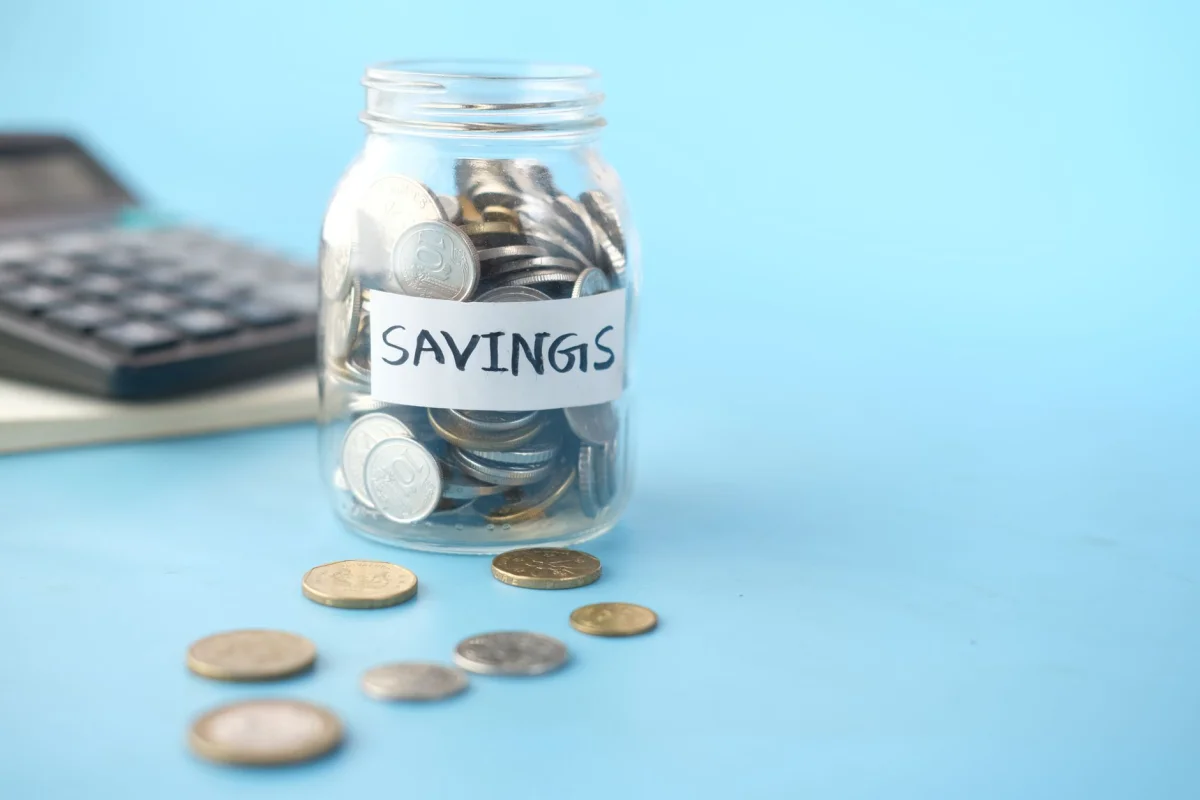
Every dollar spent on cigarettes is a dollar that didn't go into savings or investment. Over years, this difference compounds dramatically.
If a pack-a-day smoker at $9 per pack redirected that spending to an index fund earning 7% annually, which is roughly the historical average for U.S. stock markets after inflation, the outcome looks like this: after 20 years, approximately $170,000 in investment value. After 30 years, roughly $330,000. After 40 years, over $750,000. The direct cost over those 40 years, at a flat $9 per pack, would be about $131,000. The gap between that figure and $750,000 represents the opportunity cost.
This is the concept Wikipedia describes as opportunity cost: the value of the next-best alternative forgone when a choice is made. In practical terms, it means every cigarette pack is not just a $9 purchase. It is also a $9 contribution to an investment portfolio that didn't happen.
 Photo by Towfiqu barbhuiya on Pexels
The American Lung Association and other public health organizations have increasingly framed cessation in financial terms alongside health terms. For younger smokers who feel healthy and are skeptical of long-term health projections, the financial argument often lands more concretely. A 25-year-old who quits today and redirects that money to investments could retire with hundreds of thousands of dollars more than a peer who doesn't. That is a real and specific outcome.
How Inflation Makes the Long-Term Numbers Worse
Cigarette prices do not hold steady. Between 2000 and 2020, average cigarette prices in the United States roughly doubled, driven by tobacco taxes and industry pricing decisions. Assuming today's price stays constant for the next 20 years produces a significant underestimate.
A realistic model uses a 3% annual price increase, which is broadly consistent with the historical trend. At that rate, a smoker paying $9 per pack today will pay about $12 per pack in 10 years and $16 per pack in 20 years. The 20-year direct cost under this assumption climbs from $65,700 to roughly $87,000.
Opportunity cost is similarly affected. If the monthly amount redirected to investment grows as cigarette prices increase, the future investment value also increases. Running a calculation that holds today's price constant understates the compounding benefit of quitting. The EvvyTools calculator handles this automatically when you input an expected annual price increase. The default is a conservative figure, but adjusting it up or down shows how sensitive the total is to price assumptions.
What Different Smoking Profiles Actually Look Like
The financial picture changes substantially based on daily consumption and location. Here is a comparison across three profiles over 25 years, using a 3% annual price increase and a 7% investment return:
Light smoker, half pack daily at $8 per pack: Direct cost over 25 years: approximately $45,000. Total financial impact with opportunity cost included: roughly $115,000.
Average smoker, one pack daily at $9 per pack: Direct cost over 25 years: approximately $100,000. Total financial impact with opportunity cost included: roughly $260,000.
Heavy smoker, two packs daily at $9 per pack: Direct cost over 25 years: approximately $200,000. Total financial impact with opportunity cost included: roughly $500,000.
These aren't edge cases. They're the realistic financial trajectories for people who start smoking in their teens or early twenties and continue through middle age. The Centers for Disease Control and Prevention documents that the average smoker in the United States starts around age 17 and typically smokes for two to three decades. These 25-year projections describe a common pattern.
The Insurance Layer
Direct spending and opportunity cost are the most quantifiable parts of the calculation. A third layer, higher insurance premiums, is harder to pin down precisely but is real and substantial.
Smokers pay significantly more for life insurance. A 40-year-old smoker can pay two to three times what a non-smoker pays for the same policy. Over a 20-year or 30-year term, that premium differential represents tens of thousands of additional dollars. Under the Affordable Care Act, health insurers can charge smokers up to 50% more than non-smokers in many plan structures. These ongoing surcharges add to the financial impact without showing up in any pack-price calculation.
 Photo by Pixabay on Pexels
The calculator does not model insurance costs because they depend on too many individual variables. But it's worth knowing they exist when you're trying to build a complete picture of what the habit costs. The direct spending and opportunity cost numbers alone are already substantial.
How to Use the Calculator
The EvvyTools cost of smoking calculator asks for four inputs: daily packs, price per pack, years to project, and expected investment return rate. It then outputs total direct spending, projected future spending with a price increase rate, opportunity cost if that money had been invested, and the combined financial impact.
The default investment return is 7%, which reflects long-term historical U.S. stock market performance after inflation. If you prefer conservative assumptions, 5% still produces large numbers over 30-year horizons. The tool lets you adjust all four inputs and see results update immediately.
A few practical tips. First, use your actual local pack price. National averages can understate the cost significantly if you live in a high-tax state. Second, run the projection at multiple time horizons. Seeing 10 years, 20 years, and 30 years side by side makes the compounding effect concrete rather than abstract. Third, if you are evaluating whether to quit, compare a scenario where you continue versus one where you stop today. The financial difference between quitting at 30 versus quitting at 40 is substantial, specifically because of the additional compounding decade.
The EvvyTools tools directory includes other personal finance calculators that can help you plan where freed-up cash would go if you do quit, from emergency fund sizing to retirement projections. The practical question after running smoking cost numbers is usually: what does that money do if it goes somewhere better?
A Note on the Opportunity Cost Objection
The most common pushback on opportunity cost calculations is that they assume the money would actually be invested. That is a fair point. Not everyone who quits smoking redirects every saved dollar to an index fund. Some of it gets absorbed into general spending.
But the opportunity cost framing is useful even if you would never invest the money directly. Paying down debt with those dollars eliminates interest charges, which produces a guaranteed return. Directing it toward a better diet potentially reduces future medical costs. Putting it into a home down payment accelerates wealth accumulation through equity. The point is not that quitting means guaranteed investment returns. The point is that the money stops disappearing and becomes available for productive use.
 Photo by www.kaboompics.com on Pexels
For guidance on putting savings to work, the EvvyTools blog covers related topics including emergency fund sizing and retirement readiness calculations. Smokefree.gov is the primary government resource for cessation support, with tools and programs designed around the full picture of quitting, including the financial side.
The math on smoking costs is not complicated once you assemble the right inputs. It's the visibility that's usually missing. A calculator that runs the numbers explicitly tends to make the scale clearer than any general statement about expense. For most people, running the numbers once with their own pack price, actual smoking rate, and time horizon is enough to recalibrate their sense of what the habit actually costs. The output is a number specific to them, not a national average, and it tends to be more motivating than any general statistic precisely because it is personal. Whether that clarity changes behavior is a separate question. The calculation itself is just math.